Bahamas Exumas Yacht Charter: Shallow Water, Winter Planning and the Full Budget
Compare yachts for an Exumas holiday, understand draft and tender access, plan weather alternatives and account for the full charter budget.
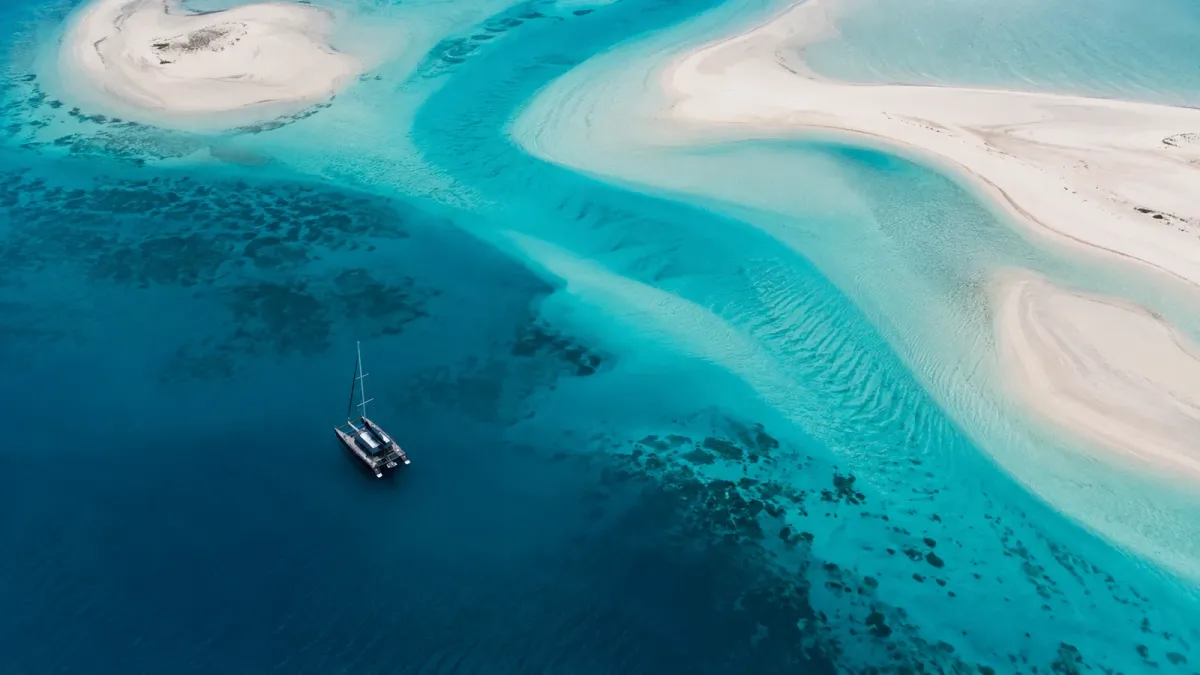
The Exumas promise the kind of water that makes a yacht holiday feel completely different from a hotel stay: pale sandbanks, low islands and long views across shifting shades of blue. Turning that appeal into a good winter charter requires a practical match between the yacht, its draft, the captain's route and the amount of time your group wants to spend travelling.
Start with that match instead of booking the largest yacht in the budget and then forcing an itinerary around it. A boat's accommodation, tender, operating limits and current positioning all affect the week. This guide explains the questions to ask while keeping the navigation decisions with the captain and current local information.
Why consider the Bahamas for a winter charter?
Northrop & Johnson's post-summer 2026 market review describes forward activity beginning to shift toward winter cruising grounds. In the booking activity it analysed for August, the Bahamas accounted for 50 bookings, or 6.7 percent. This is a defined market snapshot, not a forecast for every winter week or evidence of a universal destination ranking.
The destination also has an established boating appeal. The Bahamas tourism authority's Exumas fact sheet identifies yachting and sailing among the area's visitor activities. The planning opportunity is to build a holiday around the water and islands while being realistic about access, weather and the boat's own capabilities.
Define the kind of week you want
Ask the group whether the priority is beach time, snorkelling, local dining or covering a large cruising area. These are compatible only to a point. Every additional distant stop takes time from something else and may change the expense estimate. Give the broker a short priority list and let the captain propose an achievable route.
For a first enquiry, include dates, guest count, cabin requirements and preferred arrival airport. State whether you are open to changing the departure base. A yacht already positioned near your interests can improve the trip more than a small difference in its weekly fee. Confirm the embarkation and disembarkation arrangements before committing to flights.
Draft matters, but it is not the whole answer
Draft is the vertical depth of the yacht below the waterline in its operating condition. It matters when assessing where a boat can travel, but a brochure number does not establish safe access. Loading, water levels, chart information and the captain's required clearance all belong in the assessment.
Waterway Guide's Exumas cruising overview describes shallow-water areas as well as options for different vessels, and emphasises the effect of weather and tides around cuts. The useful lesson for charter guests is to ask for a route designed for the actual yacht, rather than assuming that all destinations are equally accessible to every boat.
A shallower draft may create more possibilities, but it does not make every patch of attractive turquoise water suitable for the main yacht. A capable tender can provide a different form of access while the larger vessel remains in an appropriate position. Ask which experiences would be reached by tender and how long those transfers are expected to take.
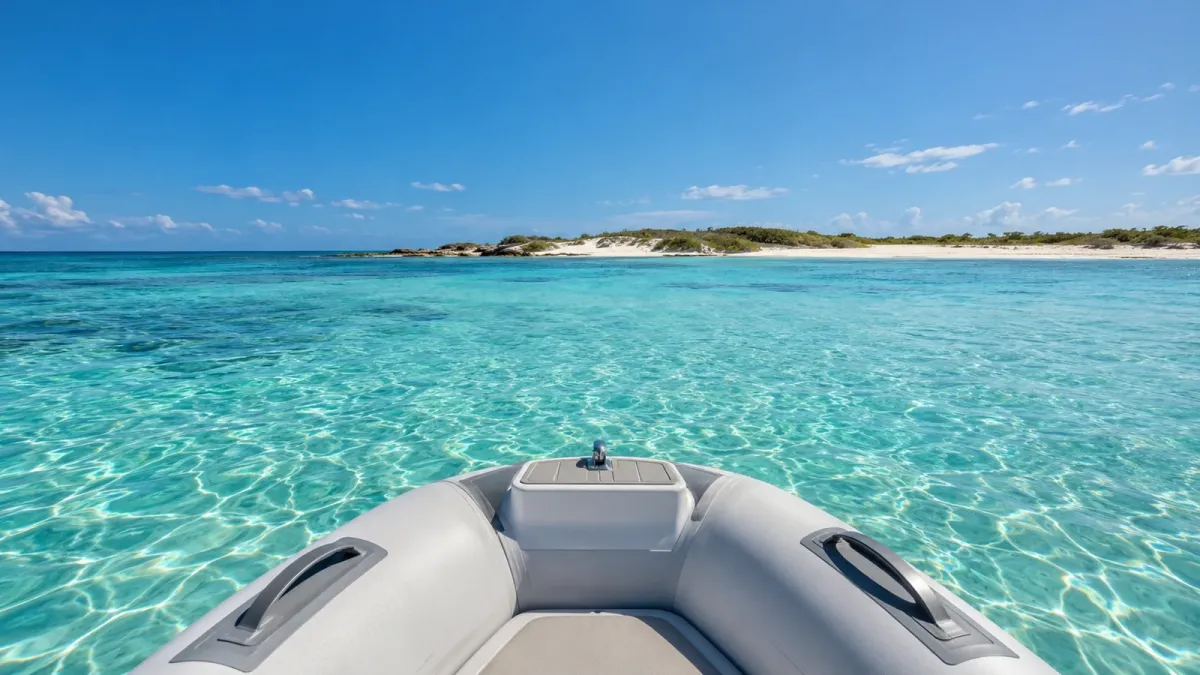
Compare catamarans and motor yachts by the holiday
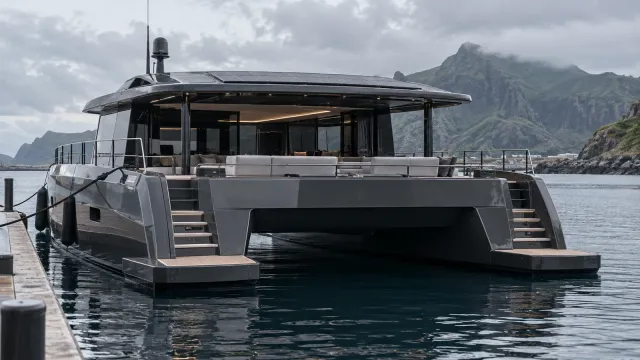
A catamaran's wide living area may suit a family that spends much of the day together, while a motor yacht may offer a cabin plan or service arrangement that better matches another party. Avoid choosing by hull type alone. Request the actual guest layout, shaded seating, water access and overnight accommodation for each candidate.
Then compare the intended route at the yacht's realistic operating speed. A faster boat may reduce passage time but use more fuel; a slower plan may be perfectly acceptable when the destination list is compact. Ask for the captain's estimate and the assumptions behind it. A generic consumption figure cannot price the week accurately.
Build a complete cost comparison
Request the charter fee, included services, expense allowance and all additional quoted charges together. Ask how taxes and local charges will be calculated for the specific charter. This guide intentionally does not quote a universal tax percentage because the relevant treatment and the terms of an individual booking need current confirmation.
Keep a worksheet for the route-dependent expenses. In a purely hypothetical example, changing the plan adds eight propulsion hours. If the captain's agreed combined estimate is 90 litres per hour and the assumed price is €1.60 per litre, the additional propulsion fuel is 8 × 90 × 1.60 = €1,152. Those inputs are invented for illustration, use euros only for arithmetic convenience and are not Bahamas prices or measured yacht performance.
The example excludes generator fuel and any other changing expenses. Replace every input with the operator's figures, specify the currency and units, and avoid mixing US gallons with litres. The YachtMetric fuel guide explains the calculation, while the charter cost guide sets it within the wider budget.
Make conservation part of the route
The Bahamas National Trust's Exuma Cays Land and Sea Park page describes protected habitats and available moorings. It also states that fishing, shelling and conching are not permitted within the park boundaries. Ask the captain how the proposed activities will comply with the current rules for the places you visit.
Confirm arrangements directly where needed rather than assuming an attractive image proves a landing or activity is allowed. Mooring suitability, availability, payments and local restrictions should be checked against the current operator and park information. Plan wildlife encounters around appropriate guidance and observation, with no expectation that animals will appear on demand.
Discuss the weather alternative before departure
Ask the captain which parts of the itinerary are most sensitive to the forecast and what the alternative plan would look like. Guests do not need a navigation briefing to understand that exposed transfers, tender rides and beach activities can be affected differently. A useful proposal explains how the holiday can remain enjoyable if the preferred sequence changes.
Also ask how weather-related changes affect prebooked excursions and transfers. Clarify which bookings are flexible and which costs may remain committed. Avoid making the final day depend on a long return passage with no margin. Your flight timetable and the yacht's operational plan should be considered together, with appropriate advice from the charter team.
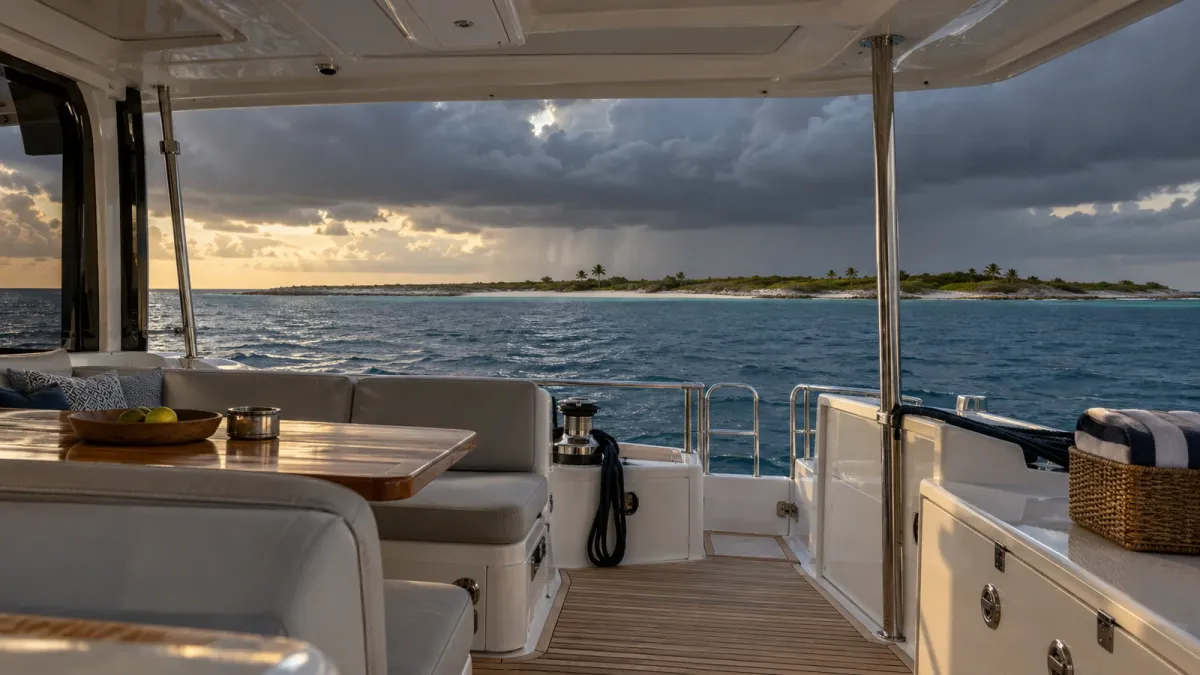
Plan for the time between the highlights
Check whether the tender offers comfortable seating and shade, where wet equipment is stored and how the yacht supports guests returning from the water. If children or older relatives are travelling, ask about the actual boarding arrangements. A lovely beach is less appealing when reaching it is exhausting for part of the group.
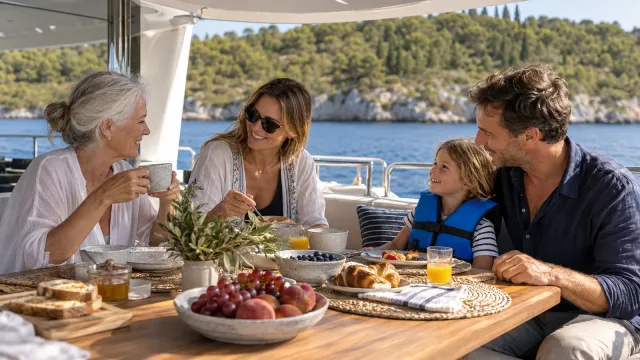
Meals and downtime deserve the same attention as excursions. Ask the chef how provisioning works along the proposed route and agree a sensible balance between dining aboard and ashore. Keep a few uncommitted periods in the week. They give the captain room to respond to conditions and allow guests to enjoy a place without immediately preparing to leave it.
A brief that produces better proposals
Request a yacht-specific route, loaded draft confirmation, tender access explanation and transparent expense assumptions. Add a weather alternative and confirmed airport transfers. Compare those answers alongside cabins and service. The strongest Exumas charter is a boat and itinerary that work together, allowing the landscape to remain the centre of the holiday without turning every day into a logistical exercise.
Sources and editorial notes
- Northrop & Johnson: the charter market after a strong summer — 2026 booking-market context within the report's dataset.
- Bahamas tourism authority: Exumas fact sheet — destination and boating context.
- Waterway Guide: cruising guide to the Exumas — draft, shallow-water and route-planning context; not passage instructions.
- Bahamas National Trust: Exuma Cays Land and Sea Park — conservation rules and park information; confirm current arrangements before visiting.
- Editorial note: numerical worksheets use hypothetical inputs, not current charter quotations. Confirm yacht-specific capabilities, costs and arrangements with the operator.