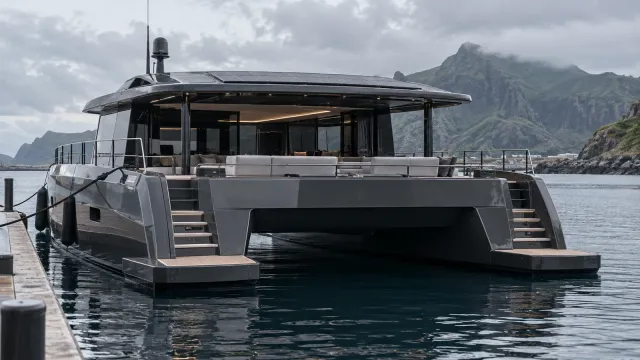
Last-Minute Yacht Charter: How to Find Value Without Rushing the Decision
A practical guide to late yacht bookings: compare the full holiday cost, check availability and crew readiness, and understand cancellation terms.

A late yacht charter booking can work exceptionally well when your group is ready to travel and flexible about the boat. It becomes expensive when a lower advertised fee distracts you from flights, repositioning, contract terms or a yacht that does not fit the holiday. The decision is therefore about readiness and total cost as much as timing.
This guide is for guests considering a private crewed charter with relatively little time before departure. The comparison method also helps with other charter formats, but inclusions, booking procedures and responsibilities differ. Always compare offers using the actual contract and the operator's written answers for your proposed trip.
What international booking evidence shows
In its June 2026 charter market analysis, Northrop & Johnson reported that average booking lead time in the data it analysed had fallen from 118 days in 2025 to 83 days in 2026. The report also cautioned that desirable yachts and peak dates could still be secured well ahead.
Those figures explain why late booking deserves attention, but they do not prove that waiting produces a discount. Lead time measures when commitments occur. Price, availability and suitability are separate questions. Treat the report as a signal about behaviour within the analysed market, not a forecast for every yacht, destination or future departure date.
Define flexibility before looking for offers
Write down the requirements that cannot change. These might include a fixed school holiday, the number of real guest cabins, step-free access to a particular area or a departure airport that everyone can reach. Then list the choices you can change, such as the precise embarkation harbour, yacht age, cruising speed or the balance between marina nights and anchorages.
Flexibility is useful when it is specific. Saying that any yacht will do encourages mismatched suggestions and wastes the limited time available. A brief stating that you need four usable guest cabins, can depart within a three-day window and will consider two nearby cruising areas gives a broker much more room to find a sensible match.
Ask why the yacht is available
An open week can have several explanations. It might be a gap between bookings, an owner's released period or a change in the calendar. Ask whether the yacht is already in the proposed embarkation port and whether the crew can support your requested dates. An empty slot on a listing does not establish operational readiness.
Also ask about the boundaries of the available period. A yacht needed elsewhere immediately afterward may offer less freedom over disembarkation time or a one-way route. Request the exact start and end locations, guest boarding times and any delivery charge before comparing the headline fee with another offer. Small calendar restrictions can make a large difference to the week.
Calculate the saving after travel costs
Use two complete columns rather than a percentage discount. In an invented example, an early option has a €40,000 base fee, €11,000 of estimated consumed operating expenses and €4,000 in flights and transfers. Its comparison subtotal is €55,000 before any taxes or other items not yet quoted. A late option has a €35,000 base fee, the same €11,000 expense estimate and €9,000 in travel costs. Its subtotal is also €55,000.
The lower charter fee has been offset by more expensive travel. This is a worksheet example, not a market quote. Add applicable taxes, delivery costs, accommodation and any other relevant items to both columns. If one package includes meals while another charges them separately, align the inclusions before drawing a conclusion.
Keep advances separate from consumed expenses. If you use an estimated expense figure in the comparison, do not add the full advance provisioning allowance on top of it as though it were another final charge. Record when cash must be paid in a separate payment schedule. The YachtMetric charter cost guide provides background on those distinctions.
Check the yacht and crew while time is short
Ask for recent photographs, an accurate accommodation plan and confirmation of equipment that matters to your group. A listing can describe a feature without explaining whether it is available during your booking. If a stabilisation system, specific water toy or particular cabin arrangement determines your choice, ask for written confirmation.
Discuss the crew's relevant experience, communication arrangements and ability to meet dietary or accessibility requirements. A quick booking leaves less time to source special provisions or outside services. Send the preference information promptly and ask what can realistically be arranged. A clear limitation disclosed before payment is more useful than an optimistic promise discovered to be impractical after boarding.
Read the payment and cancellation terms
Short notice can compress the normal payment timetable. Request the actual due dates and understand which amounts become committed at each step. Check how the agreement treats cancellation, changes to the guest list, itinerary adjustments and failure to reach the embarkation port. Do not assume that the terms of an earlier holiday apply to this contract.
Verify the contracting parties and payment instructions through an independently confirmed contact method before transferring funds. If banking details change, confirm the change using contact information already known to you. A deadline should not prevent that check. Where insurance is relevant, ask the insurer about the exact booking and circumstances rather than assuming a general travel policy covers every charter expense.

Keep the itinerary realistic
A yacht with an open week is not necessarily positioned for your original route. Start with the captain's practical operating area and work outward. Ask how many hours each proposed transfer requires and whether an alternative embarkation point would improve the holiday. A flexible port can be more valuable than a small reduction in the weekly fee.
Leave space for conditions and delayed arrivals. Packing every day with distant stops creates pressure to spend more time underway and can increase variable expenses. Choose the experiences that matter most, then let the captain organise a workable sequence. The itinerary should remain a plan subject to operational judgement, not a promise that every named stop will happen.
When booking early remains the better choice
Early planning is usually the more practical approach when only a narrow set of yachts can meet the brief. A family requiring a particular cabin layout, guests with significant mobility needs or a group tied to a specific event may have little usable flexibility. Waiting can reduce the chance of finding the right vessel even when other boats remain available.
Late booking suits groups able to decide promptly after the important checks are complete. Prepare the guest list, travel documents, total spending limit and preference information before requesting offers. Agree who can approve the choice. That preparation allows a quick decision without skipping the questions that determine whether the charter is suitable.
A decision rule you can use
Accept a late offer when the yacht meets your essential requirements, the total trip cost is acceptable and the operator can explain the contract and logistics clearly. Pass when the attraction depends entirely on a discount that disappears after other expenses. A successful late charter is a well-matched holiday bought at an acceptable total price, with enough preparation to enjoy the flexibility.
Sources and editorial notes
- Northrop & Johnson: 2026 charter market trends — provider-specific booking lead-time evidence; shorter lead times do not establish discounts.
- Editorial note: numerical worksheets use hypothetical inputs, not current charter quotations. Confirm yacht-specific capabilities, costs and arrangements with the operator.