Yacht Registration and Flagging: Costs and How to Choose a Flag
How much does yacht registration cost, and which flag state should you choose? Compare popular flags for private and charter use, with what drives the cost.
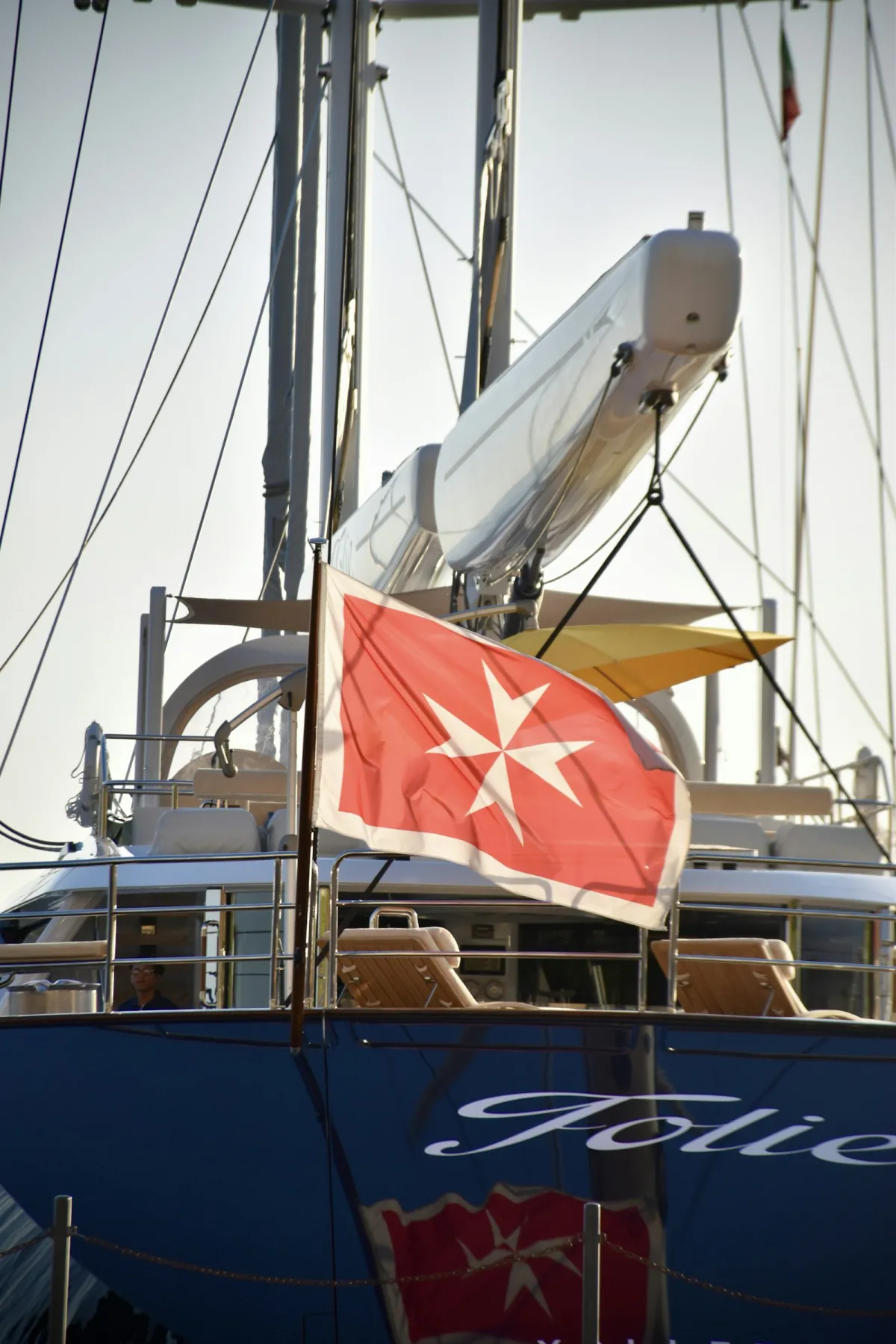
Every yacht has a flag, and the choice affects tax, safety rules, charter options, crew requirements and how easily you can sell. Registration fees themselves are only part of the cost, and published prices are rare because they depend on the yacht's size and tonnage. This guide compares popular flag states, explains what drives the cost and lists what to do if you change flag.
Quick answer
Registry fees are usually modest compared with the price of the yacht, and flag states differ more in what they allow than in cost. Published comparisons rank Poland as very low cost for private yachts, the US (Coast Guard documentation) as low, the Marshall Islands and the British Virgin Islands as low to moderate, Malta as moderate and the Cayman Islands and Isle of Man as moderate to high. Exact fees depend on length or tonnage and on whether the yacht is private or commercial, so request a fee schedule from the registry or an agent.
Popular flag states compared

| Flag | Relative cost | Notable points |
|---|---|---|
| Poland | Very low | Permanent registration for private vessels with no renewal required, and no mandatory safety inspections for private yachts under 24 m. Limited charter structuring. |
| United States (USCG) | Low | Annual renewal. Domestic charter under the Jones Act requires at least 75% US citizen crew. |
| Marshall Islands | Low to moderate | Private-registered yachts can charter up to 84 days a year after a safety survey. Charter profits are untaxed, and yachts get an automatic US cruising permit. |
| British Virgin Islands | Low to moderate | No sales tax, VAT or tax on charter income, and yachts can be held through BVI holding companies. |
| Malta | Moderate | Largest EU flag registry. Leasing structures can reduce the effective VAT. Clear private and commercial pathways. |
| Cayman Islands | Moderate to high | Charter profits are untaxed, switching between private and commercial use is possible, and the yacht can use the EU charter scheme for yachts engaged in trade. |
| Isle of Man | Moderate to high | Allows private-to-commercial switching and suits complex ownership structures such as trusts and special-purpose vehicles. |
Relative cost levels and features as summarized in a 2026 comparison guide. Verify with the registry before you decide.
What drives the cost
- Size: fees scale with length or gross tonnage.
- Use: a commercial or charter registration involves surveys, safety certification and higher fees than a private one.
- Annual renewals: some registries require yearly renewal fees, while a few offer permanent registration for private vessels.
- Agents and legal work: registration through a company structure, a local representative or a lawyer adds professional fees.
- Surveys and inspections: a flag survey is required for some registrations and for charter use.
- Tax and structuring: the real financial effect often comes from VAT treatment, charter income tax and crew rules, not the registry fee. See yacht sales tax, VAT and import duty.
How to choose a flag
- Private or charter: if you plan to charter, check which flags allow commercial use, and whether switching between private and commercial is easy.
- Where you will cruise: all the flags above are on the Paris MoU White List, which the guide treats as the baseline for cruising in Europe, the North Atlantic and the Mediterranean. A less established flag can mean more inspections.
- Owner nationality and structure: some flags require a local company, a resident representative or a particular ownership structure.
- Crew rules: check nationality, certification and manning requirements. See yacht crew cost.
- Lender and insurer: if the yacht is financed, the lender normally needs to agree to a flag change, and your insurer must be told.
- Resale: a well-known flag can make the yacht easier to sell.

Changing flag
A change of flag typically takes about four to eight weeks. The steps are to clear obligations with the current registry and obtain a deletion certificate, register with the new flag, notify the insurers, review crew contracts and check any loan covenants. Plan the change around the yacht's survey dates and its cruising calendar. For management support on this kind of paperwork, see yacht management company fees.
Frequently asked questions
How much does it cost to register a yacht?
It depends on the flag, the size and the use. Published guides give only relative levels, from very low for private registration in some countries to moderate or high for offshore commercial registries. Ask the registry or an agent for the current fee schedule.
Can I charter a privately registered yacht?
Some registries allow limited charter under private registration. The Marshall Islands, for example, allows up to 84 days a year after a survey. Beyond that you need a commercial registration.
Does the flag affect VAT?
Not by itself. Offshore registration may defer VAT but does not exempt a yacht used commercially in EU waters. Malta's leasing structures can reduce effective VAT in some cases.