How Much Does a 70-Foot Yacht Cost to Own Per Year?
A 70-foot yacht can cost roughly $200,000 to $700,000 or more per year to own, depending on purchase value, marina, fuel use, maintenance, cruising style and crew.
Updated: October 2, 2026
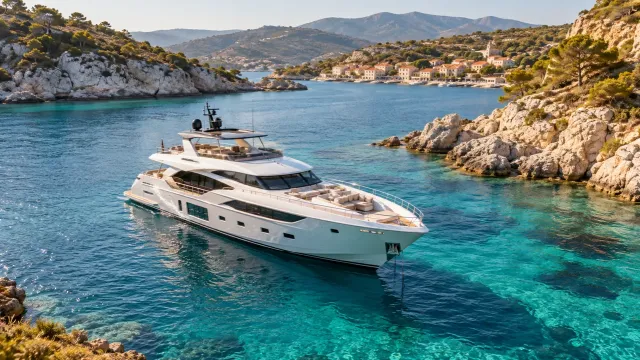
A 70-foot yacht moves into a different ownership class from a typical 50- or 60-footer. Purchase prices are higher, marina choices become more limited, fuel burn can be substantial, maintenance systems are more complex and professional crew becomes much more common. For many privately owned 70-foot motor yachts, a practical planning range is roughly $200,000 to $700,000 or more per year.
That range is intentionally broad. YachtWorld's 2026 ownership guide says annual yacht ownership and operating costs often run about 10% to 25% of vessel value. On a $2.5 million yacht, that rule of thumb implies about $250,000 to $625,000 per year before unusual refits, major failures or unusually heavy crew costs.
70-Foot Yacht Price vs Annual Ownership Cost
If you are searching for a 70-foot yacht price, separate the purchase transaction from the annual ownership budget. The yacht’s asking price does not include all the money needed to buy, prepare and run it. This guide focuses on recurring costs; the purchase section below explains what to check for a specific boat.
| Budget | What to include |
|---|---|
| Purchase and first-year preparation | Negotiated price, survey and inspections, applicable purchase taxes, delivery and immediate work identified during the survey |
| Annual operating expenses | Marina, insurance, fuel, servicing, repairs, cleaning and any paid crew |
| Reserve allocation | Money set aside for unexpected work; keep it visible separately from expenses already incurred |
| Financing and value change | Loan payments for cash-flow planning; depreciation as a separate value comparison |
A percentage-of-value estimate is a broad cross-check, not an extra expense. Do not add it on top of a detailed line-by-line budget. Get quotes for the actual yacht, cruising area and operating plan.
Build your own figures with the Yacht Annual Cost Calculator. Enter 0 when a category does not apply, and keep blanks visible until you have a quote.
70-Foot Yacht Cost Per Year: Quick Answer
For a privately operated 70-foot motor yacht, a first-pass annual budget can look like this:
| Yacht value | Rough annual ownership budget |
|---|---|
| $1,500,000 | $150,000-$375,000 |
| $2,000,000 | $200,000-$500,000 |
| $2,500,000 | $250,000-$625,000 |
| $3,000,000 | $300,000-$750,000 |
| $4,000,000 | $400,000-$1,000,000 |
These are planning ranges, not quotes. A lightly used owner-operated yacht in a lower-cost marina can come in below them. A fast flybridge yacht with full-time crew, premium dockage, high annual engine hours or deferred maintenance can exceed them.
How Much Does a 70-Foot Yacht Cost to Buy?
YachtWorld asking prices checked in September 2026 illustrate how much individual 70-foot yachts can differ. A 2018 Azimut S7 was listed around $1.6 million, a 2020 Galeon 680 Fly around $2.0 million, a 2020 Monte Carlo Yachts MCY 70 around $2.3 million to $3.0 million, and a 2020 Princess F70 around $3.05 million. New-build examples can be much higher: a 2026 Johnson 70 was listed at $4.25 million and a 2026 Solaris Power 70 Grand Coupe at $6 million. These are asking prices for individual boats, not sale prices, valuations or a market-wide range, and listings can change or disappear. Recheck any listing before relying on its price.
Length alone does not determine operating cost. Hull type, displacement, propulsion, engine hours, stabilizers, generators, hydraulic systems, crew accommodation and onboard equipment can change the annual budget dramatically.
Marina and Docking Costs
Dockage is one of the most predictable expenses, but 70 feet is large enough that marina availability itself becomes part of the equation. YachtWorld notes that slips for larger yachts in premium markets can run roughly $2,000 to $5,000 or more per month. Beam, shore-power requirements, liveaboard policies, hurricane plans and minimum-length billing can increase the real cost.
If the yacht is stored ashore for part of the year, YachtWorld's 2026 guidance puts seasonal storage broadly around $50 to $150 per foot in applicable markets. At 70 feet, that alone can add thousands of dollars before haul-out, pressure washing, blocking and service work.
How Much Fuel Does a 70-Foot Yacht Use?
Fuel consumption varies enormously with speed and hull design. BoatTEST data illustrates the spread. A Monte Carlo Yachts 70 burned about 11.5 gallons per hour at 9.4 knots, about 67.4 gallons per hour at 16.6 knots and about 97.7 gallons per hour at 21 knots. A Pearl 72 burned about 83.4 gallons per hour at 19.4 knots and 111.9 gallons per hour at 24 knots.
High-performance yachts can burn even more. BoatTEST measured a Hatteras GT70 at about 128 gallons per hour at 27.4 knots and 178 gallons per hour at 33 knots. The lesson is simple: your cruising speed matters as much as the boat's length.
Example fuel calculation
Assume an average cruise burn of 90 gallons per hour and 100 engine hours per year:
90 GPH × 100 hours = 9,000 gallons per year
At an example diesel price of $5 per gallon, that is $45,000 in annual fuel. At 200 hours, the same assumption becomes $90,000. A slower-displacement operating profile can reduce this dramatically, while a fast planing yacht can exceed it.
For detailed consumption tables and trip-cost formulas, see our complete yacht fuel cost guide.
Maintenance and Repairs
At around 70 feet, maintenance is no longer just a larger version of a smaller yacht's service schedule. There may be multiple generators, stabilizers, hydraulic passerelles or platforms, chilled-water air conditioning, watermakers, larger battery banks, crew systems and much more complex electrical and plumbing infrastructure.
- Main engine and generator servicing
- Bottom paint, running gear and haul-outs
- Stabilizers, thrusters and hydraulic systems
- Air-conditioning and refrigeration
- Watermaker and freshwater systems
- Navigation, communications and entertainment electronics
- Teak, paint, gelcoat and exterior detailing
- Tenders, davits and lifting equipment
- Interior upholstery, appliances and furnishings
YachtWorld's broad rule of thumb is to reserve roughly 10% of vessel value annually for maintenance over the long term. Some years will be much lower, but one major stabilizer, generator, air-conditioning or engine event can quickly change the budget.
Yacht Insurance
A rough planning benchmark is around 1% to 2% of insured value per year, according to YachtWorld. On a $2.5 million insured value, that suggests approximately $25,000 to $50,000 per year. Actual pricing depends on cruising area, storm exposure, yacht type, owner experience, claims history, deductible, navigation limits and insurer requirements.
Do You Need Crew for a 70-Foot Yacht?
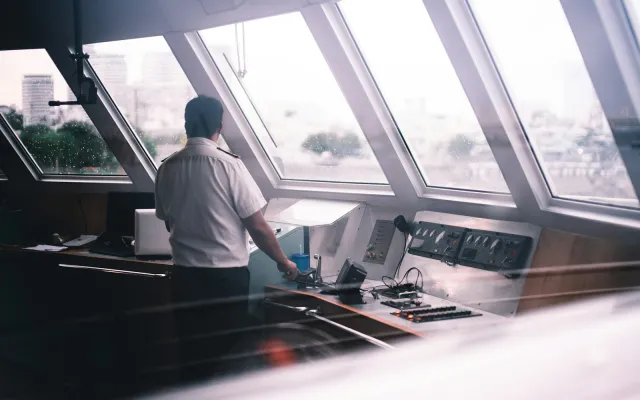
This is one of the biggest differences from a 50- or 60-foot yacht. YachtWorld says professional crew becomes a practical necessity for many yachts in the 70-foot-and-above range. Its 2026 cost guide puts a captain alone at roughly $80,000 to $150,000 or more annually, depending on experience and vessel size, while a larger professional crew can cost several hundred thousand dollars per year before benefits, travel and training.
That does not mean every 70-footer requires a permanent full crew. YachtWorld's owner-operator guidance says some experienced owners can still manage yachts in the 65- to 75-foot range, particularly with modern joystick docking, thrusters, cameras and good helm visibility. However, occasional or part-time crew becomes much more attractive at this size.
Example Annual Budget for a $2.5 Million 70-Foot Yacht
| Expense | Illustrative annual budget |
|---|---|
| Marina / storage | $50,000 |
| Insurance | $37,500 |
| Fuel | $60,000 |
| Routine maintenance | $80,000 |
| Haul-out / bottom service | $18,000 |
| Cleaning / detailing | $18,000 |
| Electronics and miscellaneous repairs | $20,000 |
| Part-time / seasonal crew | $60,000 |
| Contingency reserve | $35,000 |
| Estimated total | $378,500 |
This is an illustrative private-use budget, not a quote. It excludes financing, depreciation, taxes, major refits and full-time multi-person crew. A yacht with a permanent captain and additional crew can move the total much higher.
Read the Example Budget Without Double Counting
| Measure | Amount in the example |
|---|---|
| Operating subtotal before reserve | $343,500 |
| Reserve allocation | $35,000 |
| Annual cash budget including reserve | $378,500 |
The example categories are intended to be separate. If a maintenance quote already covers haul-out, cleaning or replacements, remove those overlapping amounts from the separate rows. A reserve allocation is money set aside, so actual spending can differ from the annual cash budget.
For a financed purchase, add annual loan payments to the cash budget. Keep depreciation separate because it is a change in asset value rather than a payment to a supplier. The calculator shows these comparisons separately; it does not calculate purchase taxes, major refits or a full investment return.
Monthly Budget and Fuel Assumptions for the 70-Foot Example
The $378,500 annual example equals a monthly planning allocation of approximately $31,542. This is an annual total divided by 12, not a prediction of an equal bill every month: insurance, haul-outs and repairs may be paid in larger installments.
| Budget measure | Annual amount | Monthly equivalent, rounded |
|---|---|---|
| Operating expenses before reserve | $343,500 | $28,625 |
| Reserve allocation | $35,000 | $2,917 |
| Total cash allocation including reserve | $378,500 | $31,542 |
To make the $60,000 fuel line reproducible, assume 120 propulsion hours at a combined average burn of 90 US gallons per hour and an illustrative $5 per US gallon. Propulsion fuel is 120 × 90 × $5 = $54,000. Add 600 generator hours at 2 US gallons per hour and the same price: 600 × 2 × $5 = $6,000. Together they total $60,000. These are budget assumptions, not measured consumption for every 70-foot yacht or current fuel prices. Generator hours can overlap with propulsion hours.
What if you cruise for 200 hours instead?
Keeping the illustrative burn, price and generator allowance unchanged, 200 propulsion hours cost $90,000; adding $6,000 for the generator gives $96,000 of fuel. Replacing the original $60,000 fuel line increases the total cash allocation from $378,500 to $414,500, or approximately $34,542 per month. Do not add the new fuel total on top of the old one. More running hours may also affect servicing and other expenses, which this comparison holds constant.
Rebuild this example in the Yacht Annual Cost Calculator using 120 propulsion hours, 90 US gallons per hour and $5 per US gallon, then add generator use separately. Replace the other rows with vessel-specific quotes. Use the fuel budget guide for mixed-speed cruising, the marina guide for berth costs and the insurance guide for quote comparisons.
What Costs the Most?
At 70 feet, there is no single answer. Fuel can dominate for a fast yacht used heavily. Crew can become the largest line item for a professionally operated yacht. Maintenance can dominate in a major refit year, while marina and insurance remain substantial fixed costs regardless of use.
How Does a 70-Foot Yacht Compare With a 60-Foot Yacht?
The jump from 60 to 70 feet is often more significant than the number suggests. A 70-footer generally has more complex systems, larger engines, higher fuel capacity, more expensive dockage and a much greater chance of requiring professional crew. For the next size down, see our 60-foot yacht ownership cost guide.
Considering a larger yacht? Our 80-foot yacht guide compares actual dimensions, cabin arrangements and the marina and staffing questions to check when moving up from 70 feet.
To turn vessel-specific quotes into a worksheet, follow our annual yacht budget calculation guide before entering your figures in the calculator.
Bottom Line
A practical first estimate for a 70-foot yacht is to budget around 10% to 25% of yacht value per year and then replace that broad estimate with real marina, insurance, fuel, service and crew quotes. For many privately operated 70-foot yachts, annual ownership can easily land around $200,000 to $700,000 or more.
Build the next part of your yacht budget
Next step: record your own quotes and assumptions in the annual yacht cost calculator, then total the budget.
Frequently Asked Questions
How much does a 70-foot yacht cost per year?
A broad planning range is roughly $200,000 to $700,000 or more per year, depending on yacht value, marina, fuel use, maintenance and whether professional crew is involved.
How much fuel does a 70-foot yacht burn?
There is no universal figure. Published BoatTEST data for 70-foot-class motor yachts ranges from around 10 gallons per hour at slow displacement speeds to well above 100 gallons per hour at faster planing speeds.
Can you operate a 70-foot yacht without crew?
Some highly experienced owners can, particularly on yachts designed for owner-operation, but 70 feet is the point where professional or part-time crew becomes much more common. Insurance requirements, local rules and yacht design also matter.
How much is insurance on a 70-foot yacht?
A rough planning benchmark is around 1% to 2% of insured value per year, although actual premiums vary substantially by vessel, location, cruising area and owner profile.
Sources
- YachtWorld — The Real Cost of Owning a Yacht (2026)
- YachtWorld — Owner Operator Yachts (2026)
- BoatTEST — Monte Carlo Yachts 70 test data
- BoatTEST — Pearl 72 test data
- BoatTEST — Hatteras GT70 test data
- YachtWorld — 2018 Azimut S7 listing
- YachtWorld — 2020 Galeon 680 Fly listing
- YachtWorld — 2020 Princess F70 listing
- YachtWorld — 2026 Johnson 70 listing
- YachtWorld — 2026 Solaris Power 70 Grand Coupe listing