80-Foot Yacht Guide: Dimensions, Cabins and Ownership
Compare real dimensions, cabin layouts and marina requirements for 80-foot-class motor yachts, with builder specifications and a practical ownership checklist.
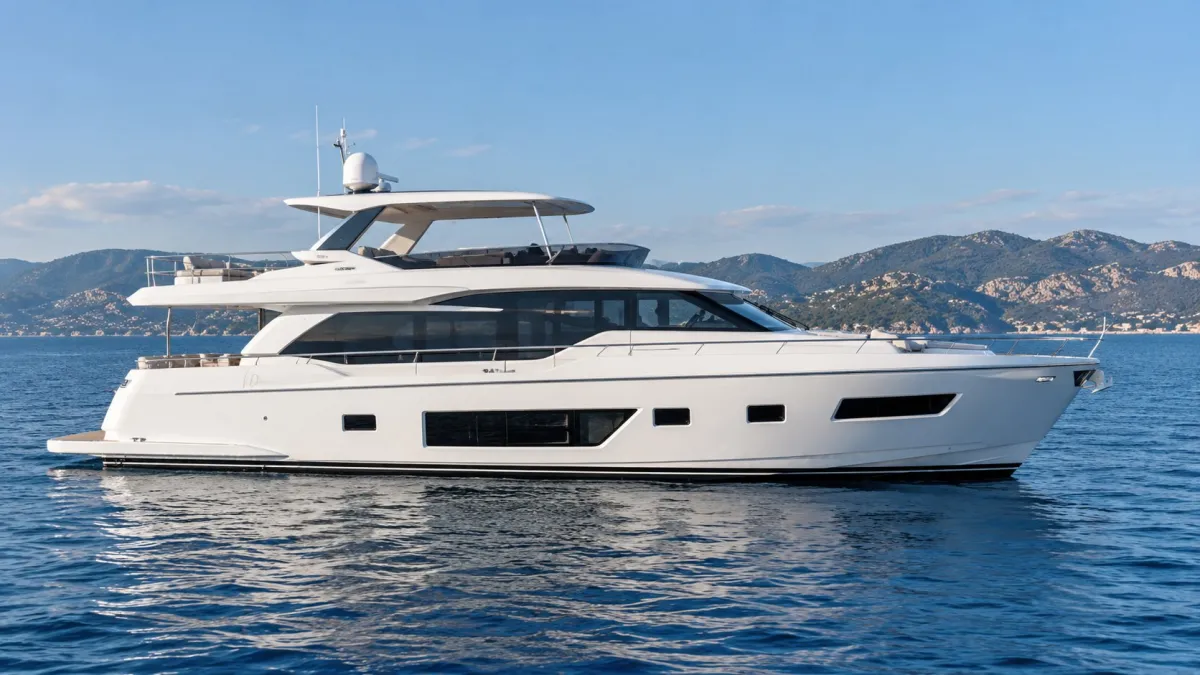
Updated: October 1, 2026
An 80-foot yacht is about 24.4 metres long, but an “80” model name does not guarantee an exact 80-foot overall length. The yachts compared below measure between 25.11 and 25.50 metres. Beam, draft, deck arrangement and separate crew space can matter just as much as the number on the model badge.
This guide focuses on privately used motor yachts in the 80-foot class. It explains how to read their specifications, compare layouts and check whether the yacht fits your marina and ownership plan. Sailing yachts and commercial charter vessels require a different comparison.
80-foot yacht dimensions at a glance
Exactly 80 feet equals 24.384 metres. Builders may publish length overall with or without a bow pulpit or other projections. Use the exact specification and confirm the marina’s measurement method before reserving a berth. Our yacht marina fees guide explains how berth charges are usually calculated.
| Measurement | What it tells you | What to verify |
|---|---|---|
| Length overall | The vessel’s stated end-to-end length | Whether the published figure includes projections |
| Beam | Maximum width | Berth width and room for fenders and access |
| Draft | Depth below the waterline | Approach depths, tides and the marina’s clearance requirements |
| Air draft | Height above the waterline | Bridge clearance and any equipment that changes the height |
| Displacement | Vessel weight at a stated loading condition | Which fuel, water and equipment loads are included |
These measurements answer different questions. Length and beam help you assess the berth; draft affects access; loading condition affects how comparable two weight figures really are. A model name is a starting point, not a complete specification.
Real examples: three different interpretations of the 80-foot class
The figures below come from the builders’ published specifications, checked on October 1, 2026. They describe model specifications, not an inspection of an individual yacht. Equipment, build year and loading can change the details.
| Model | Published length | Beam | Draft | Fuel capacity |
|---|---|---|---|---|
| Princess Y80 | 25.50 m / 83 ft 8 in, including pulpit | 6.07 m | 1.80 m | 7,000 L |
| Princess X80 | 25.11 m / 82 ft 5 in | 6.07 m | 1.83 m | 7,000 L standard |
| Princess S80 | 25.44 m / 83 ft 6 in, including pulpit | 6.07 m | 1.82 m | 7,000 L |
Sources: Princess Y80 specifications, Princess X80 specifications and Princess S80 specifications.
The Y80’s published length excluding its pulpit is 25.11 metres. That distinction explains why two different length figures can both be correct for the same yacht. These examples come from one builder and illustrate different designs within the size class, rather than the whole market.
How many cabins does an 80-foot yacht have?
Read the actual layout rather than assuming a cabin count from length. The Princess X80’s published layout has four en-suite guest cabins accommodating eight guests. That is one verified example, not a promise that every 80-foot yacht has the same arrangement. Princess describes the X80 accommodation here.
Separate the following when comparing listings:
- Guest cabins: enclosed sleeping rooms for owners and guests.
- Guest berths: the number of sleeping places in the chosen configuration.
- Crew accommodation: separate quarters, with their own access and facilities where provided.
- Day capacity: a different question from overnight accommodation; check the documentation for the actual yacht.
Visit the cabins and check usable headroom, bed access, storage, ventilation and privacy. A floor plan can show four rooms without showing how comfortable those rooms will be for your guests.
Flybridge, enclosed upper deck or sport layout?
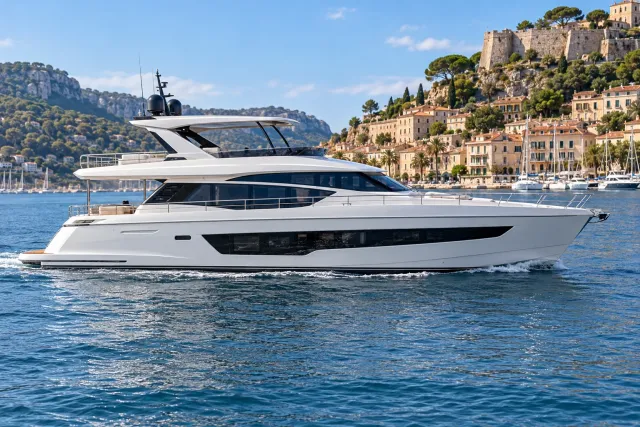
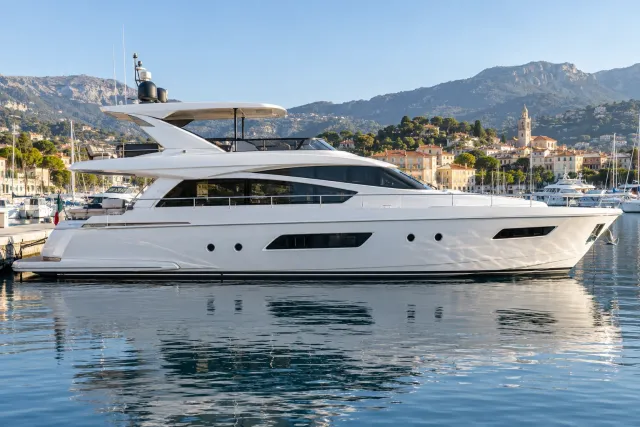
At similar lengths, deck design can create very different experiences. An open flybridge gives you an outdoor helm and elevated social space. An enclosed upper area can provide another sheltered living or navigation space. A sport-oriented layout may prioritise a lower profile and a different balance of indoor and outdoor areas.
Compare how you will actually use the yacht: dining in hot weather, cruising in rain, moving between decks and watching children or guests. Check stairs, side decks, handholds, tender storage and the route from the galley to the dining areas. More overall length does not automatically mean a better layout for your family.
What changes when moving from 70 to 80 feet?
The numerical step is 10 feet, or about 3.05 metres. The practical change depends on both yachts. A broader beam, another deck or a different machinery arrangement can change usable space and ownership requirements more than length alone.
| Comparison | Ask before moving up a size |
|---|---|
| Berth | Can the marina accept the new overall length, beam, draft and power requirements? |
| Accommodation | Do you gain useful guest or crew space, or mainly larger existing rooms? |
| Handling | How do visibility, windage, docking equipment and deck access change? |
| Maintenance | Which additional systems and larger components need servicing? |
| Staffing | Who will operate, clean and maintain the yacht during your planned season? |
Use our 70-foot yacht ownership guide for the closest smaller comparison, and the 60-foot guide if you are weighing a bigger step down in size.
Can an owner operate an 80-foot yacht?
Length alone cannot answer that question. Assess your experience, the yacht’s controls and sightlines, the intended passages, who will handle lines and the actual workload. Ask the insurer about its operating requirements for the specific vessel and owner. Confirm any applicable qualifications for your planned use and cruising area.
Also distinguish driving the yacht from managing it. Yard appointments, cleaning, provisioning and machinery checks still need someone’s time. If paid help is part of your plan, budget the full arrangement with our crew cost guide.
Fuel capacity does not tell you annual fuel cost or range
A 7,000-litre tank describes storage capacity. It does not tell you fuel burn per hour or how far the yacht will travel at your chosen speed. For comparisons, request performance data with speed, loading and combined engine consumption stated clearly.
Annual propulsion fuel cost = engine hours × combined fuel burn per hour × price per fuel unit. Use matching units and allow separately for generator and tender use. Our fuel cost guide explains the calculation. Do not use maximum speed as a substitute for a cruising consumption figure.
Build the ownership budget from the exact yacht
There is no single annual cost that follows from “80 feet.” Get quotes for the vessel’s berth, insurance, service schedule and staffing plan. Check service records and identify work due soon after purchase. Keep any major refit and acquisition expenses visible rather than hiding them in a recurring-cost estimate. For how the main cost categories fit together, see our complete yacht ownership cost guide.
Follow our annual budget worksheet guide, then use the free yacht cost calculator to total your own figures. The calculator separates the operating subtotal, reserve allocation, loan-payment view and depreciation comparison.
Before you shortlist an 80-foot motor yacht
- Confirm exact overall dimensions and the marina’s berth availability.
- Compare the actual guest and crew layouts, including any previous alterations.
- Record engine, generator and major-system specifications and service history.
- Request consumption data at your intended cruising speed.
- Obtain vessel-specific marina, insurance, maintenance and staffing quotes.
- Arrange survey and sea-trial findings to inform the final shortlist and budget.
Frequently asked questions
How long is an 80-foot yacht in metres?
Exactly 80 feet is 24.384 metres. A yacht marketed in the 80-foot class may be longer: the three builder examples in this guide range from 25.11 to 25.50 metres.
How wide is an 80-foot yacht?
The three examples here all have a published beam of 6.07 metres, about 20 feet. That narrow sample is not a universal size range; use the exact yacht’s specifications when checking a berth.
Does an 80-foot yacht always sleep eight guests?
No. The Princess X80 is a published four-cabin, eight-guest example. Other models and modified layouts can differ. Check the actual accommodation plan.
Is an 80-foot yacht automatically a superyacht?
For a buying decision, the label is less useful than the measured length, layout, equipment and operating requirements. Do not infer a vessel’s legal classification or staffing obligations from a marketing term.