70-Foot Yacht Dimensions: Layout, Beam and Draft
Compare real 70-foot yacht dimensions, understand beam, draft and air draft, and use a practical checklist for layout, marina fit and haul-out planning.
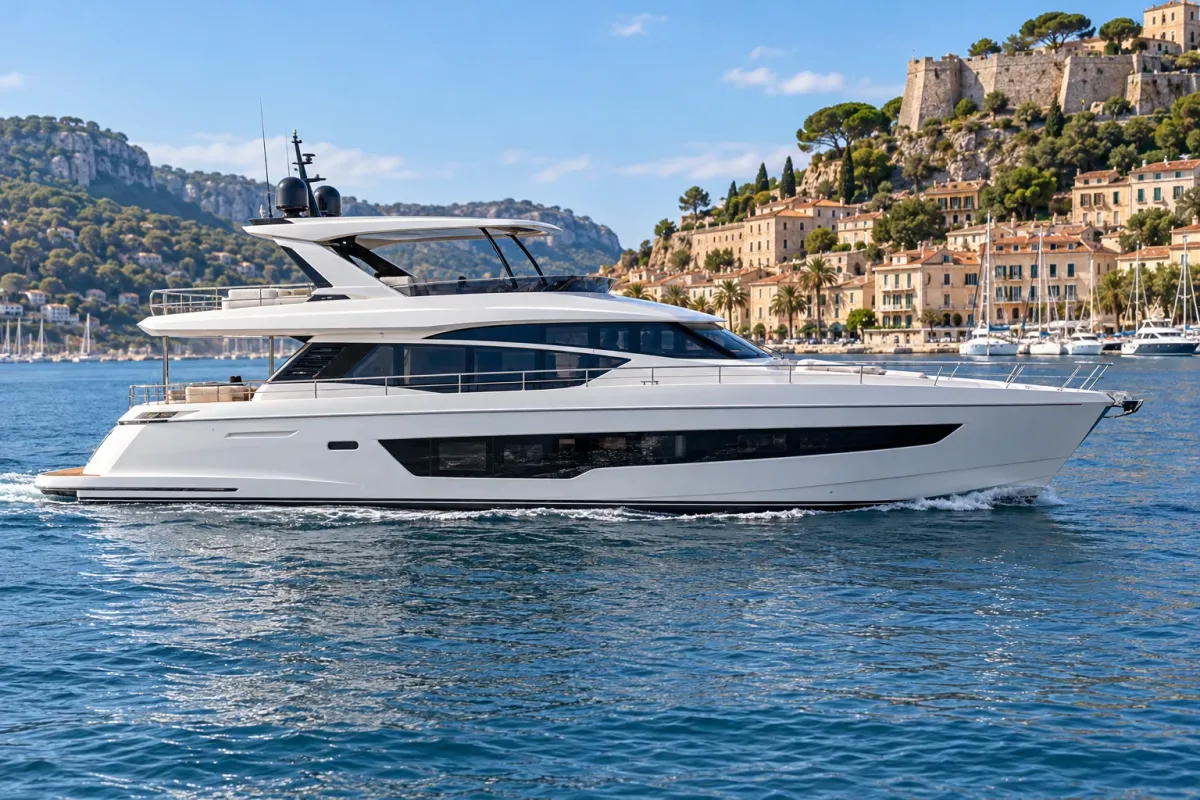
A “70-foot yacht” can describe very different boats. A conventional motor yacht may be about five metres wide, while a power catamaran in the same length class can be more than eight metres wide. The difference changes berth availability, marina fees, handling room, cabin layout and the type of cruising that feels practical.
This guide explains how to read the dimensions of a 70-foot yacht, what to check in the deck plan, and how to compare a monohull with a power catamaran. Manufacturer figures below are examples for named models, not averages or guarantees for every yacht in this class.
Quick answer: how big is a 70-foot yacht?
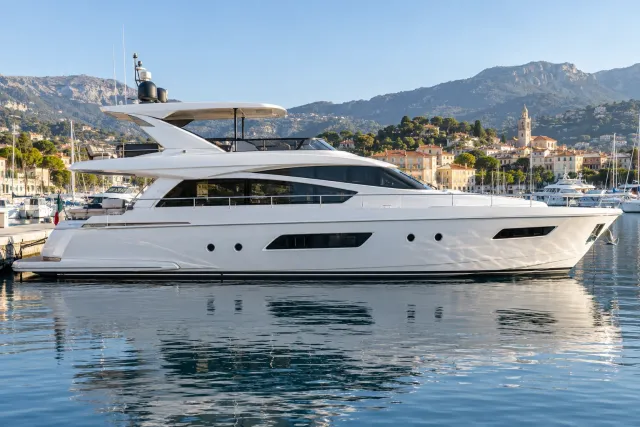
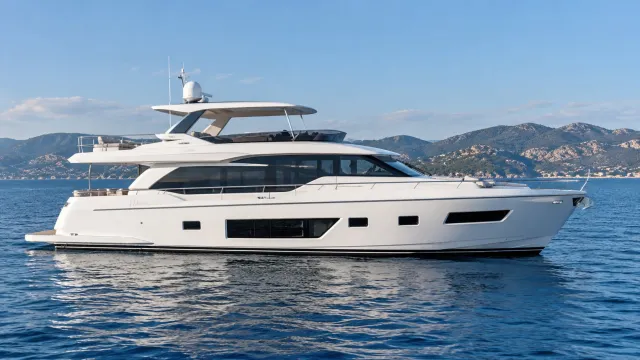
Seventy feet equals 21.336 metres, but a yacht’s model name may be rounded. Sunseeker lists the Manhattan 68 at 21.21 metres (69 feet 7 inches) overall, 5.26 metres (17 feet 3 inches) in beam and 1.60 metres (5 feet 4 inches) in draft. Its 2025 brochure lists half-load displacement of 39,809 kilograms for the new model and a different displacement figure for the previous Manhattan 68 specification, so always check the relevant model year and condition.
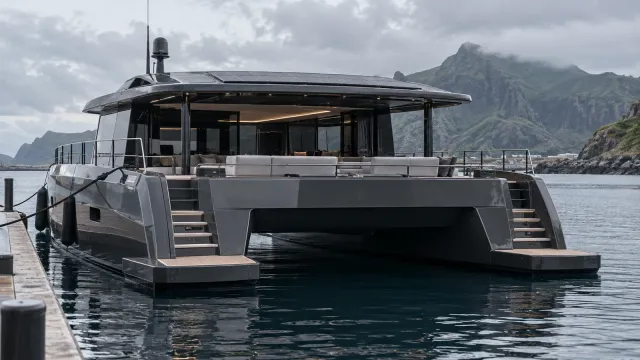
The hull form changes the picture dramatically. Aquila lists its 70 Luxury Power Catamaran at 21.30 metres (69 feet 10 inches) overall, with an 8.21-metre (26-foot-11-inch) beam and 1.44-metre (4-foot-9-inch) draft. Its near-matching length does not mean it can use the same berth as a 5.26-metre-wide monohull. See the Sunseeker 2025 Manhattan 68 brochure and Aquila 70 specifications.
Use the model’s actual length, beam, draft, height and displacement—not just the “70” badge—when checking where it can berth, cruise or be hauled out.
Understand the dimensions before comparing boats
- Length overall (LOA): the published end-to-end length. Confirm whether the builder includes the pulpit, platform or other fittings and whether the marina prices by LOA or another rule.
- Beam: the boat’s widest point. It affects slip width, access through marina entrances, travel-lift limits and the space available for side decks. Catamaran beam is commonly much wider than a monohull of similar length.
- Draft: the vertical distance to the lowest underwater point. Propellers, pods, rudders, keels, loading and measurement conditions matter. The Sunseeker brochure gives a 1.60-metre draft for the Manhattan 68; Aquila lists 1.44 metres for the 70 Luxury.
- Air draft: the height above the waterline to the highest fixed point. Radar, antennas, hardtops and optional equipment can change it. Verify the actual configured vessel before relying on a bridge-clearance plan.
- Displacement: the vessel’s weight in a stated condition, such as half load or full load. The figure matters for lifting and support, but only compare numbers with their loading definitions.
Monohull or power catamaran: the footprint trade-off
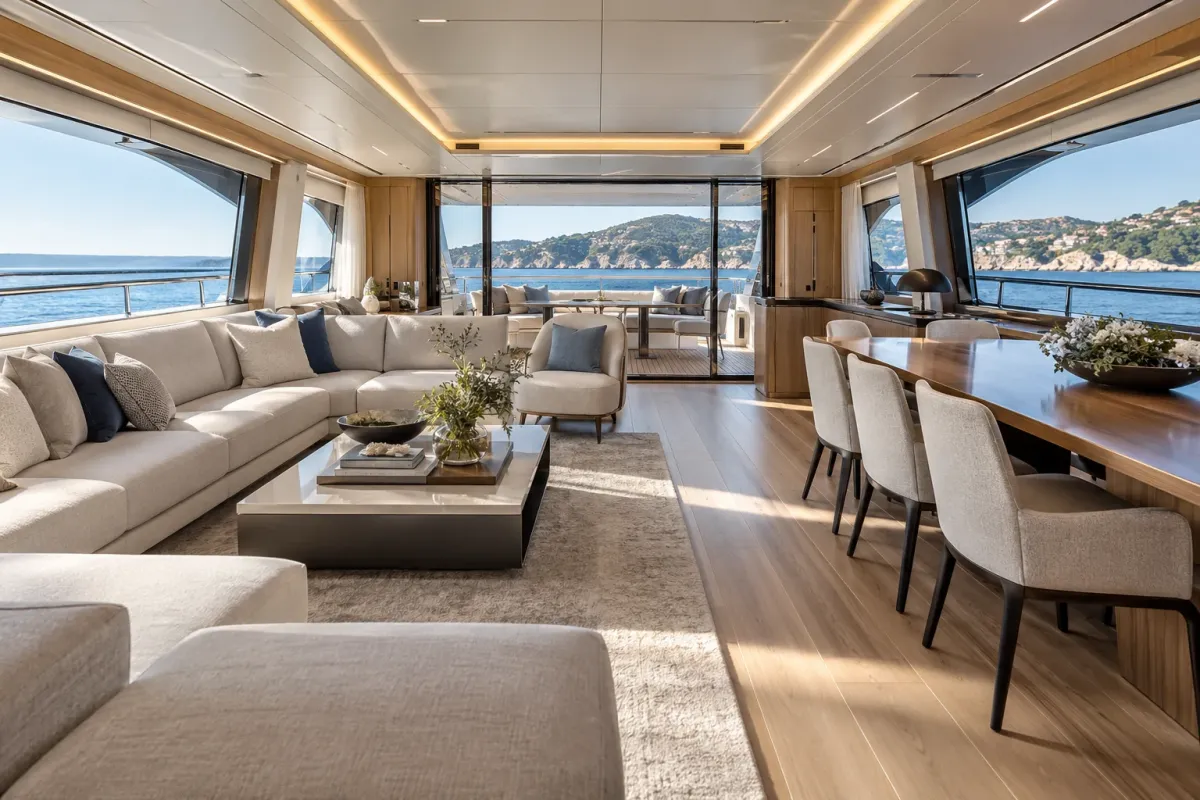
The two specification examples show why length alone is a poor fit test. The Manhattan 68’s listed beam is 5.26 metres; Aquila’s 70 Luxury is 8.21 metres wide. A catamaran’s broad platform can support a different arrangement of social spaces and cabins, while its twin hulls and overall beam affect marina access and the number of suitable slips. A monohull may be easier to place in a conventional berth sized for a single hull, though availability still depends on the marina.
Do not assume that a wider catamaran automatically has a lower draft or can enter every shallow anchorage. Compare the exact draft and underwater appendages, then check current local depths, tide, charted obstructions and under-keel clearance. If passage planning includes bridges, verify the boat’s fully equipped air draft and the relevant water-level conditions.
What layout can you expect at 70 feet?
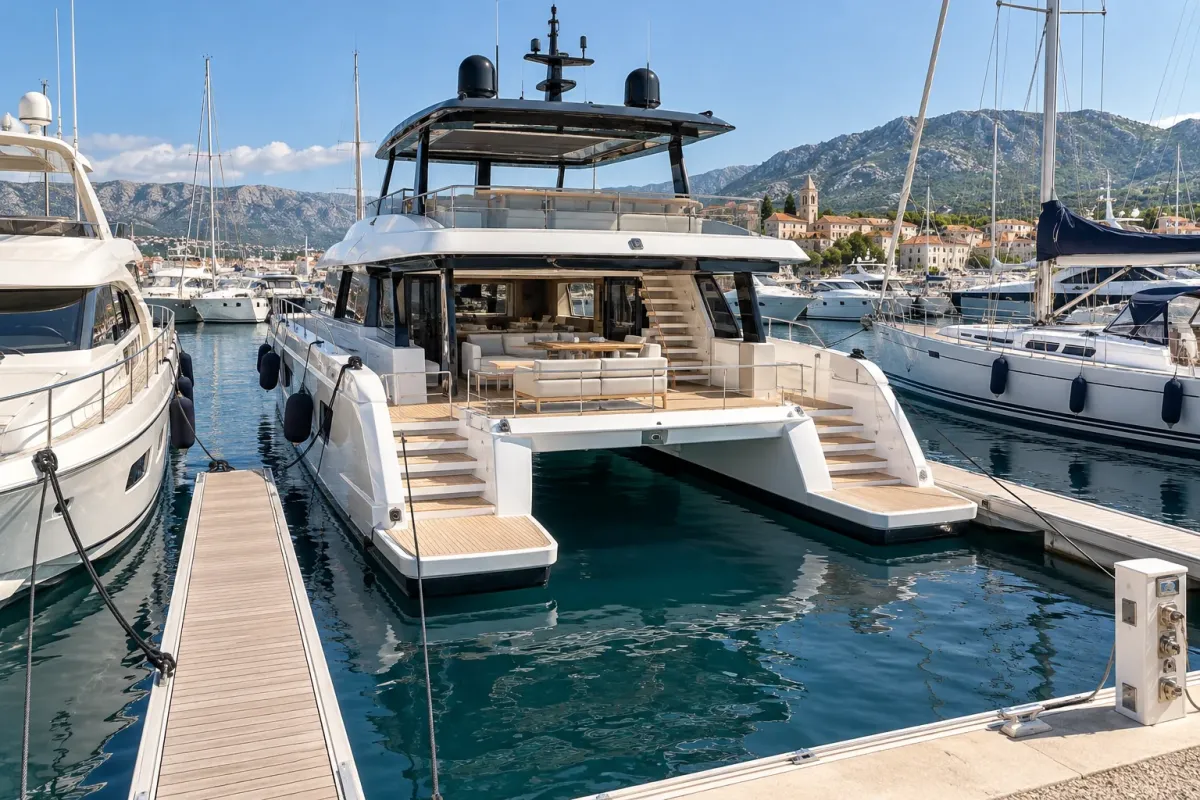
Cabin counts are model-specific. Sunseeker lists the Manhattan 68 for up to eight guests and up to two crew. The Aquila 70’s layout and accommodation are presented separately in its downloadable specification and layout materials. At this size, compare the actual general-arrangement (GA) plan and option list instead of treating a cabin count as a standard for all 70-foot yachts.
Review the layout with the way you expect to use the boat in mind:
- owner’s suite location, privacy, headroom and storage;
- guest cabins and whether they have dedicated or shared bathrooms;
- crew cabin, access route, head and separation from guest areas;
- galley position and service route to the salon and exterior dining;
- flybridge, cockpit and foredeck seating, shade and circulation;
- tender garage or davit capacity, water-toy storage and engine-room access;
- shore-power, air-conditioning, battery and machinery space.
Ask the seller for the GA drawing of the exact hull and interior version. Optional hardtops, beach clubs, side decks, crew cabins and equipment packages can change usable space, weight or the boat’s practical height and width.
Check the marina and the route into the berth
Send the marina the yacht’s exact LOA and beam before signing a berth agreement. Ask whether its published maximum length and width include the swim platform, pulpit and fenders, and whether catamarans have a separate rate or berth policy. Confirm the slip’s clear width, finger-pier arrangement, entrance width, turning basin, controlling depth and exposure to crosswinds.
For a catamaran, pay special attention to side-by-side clearance and the marina’s ability to accommodate the full beam. For either hull type, a berth that looks wide enough on a listing may be difficult to enter if the basin is tight or exposed to wind. Request a written fit confirmation when possible.
Draft, air draft and cruising access
Compare draft against the shallowest part of your intended route, not just the depth at the destination marina. Check whether the manufacturer states draft at full load, half load or another condition and whether the figure includes propellers, pods, rudders or keels. Fuel, water, tender, stores and installed options can affect the vessel’s operating condition.
Use current charts and local navigation information, and allow appropriate under-keel clearance for tide, waves, bottom type and uncertainty in depth data. For bridges or overhead cables, confirm the fully equipped air draft with the builder or surveyor and verify clearance for the expected water level. Published specifications are useful starting points, not substitutes for route planning.
Haul-out and storage planning
Before booking a lift, give the yard the exact model, beam, draft, estimated displacement and any known lifting points. Confirm travel-lift safe working load and opening width, sling positions, cradle or blocking requirements and space on the hardstand. Ask the yard whether pods, propellers, rudders, stabilizers or catamaran hull spacing require a specific support arrangement. The yard must approve the plan for the individual vessel.
For winter storage, also verify that the yacht’s height on its cradle fits the shed or storage area. A boat’s air draft afloat is not the same as total height ashore on a cradle.
70-foot yacht dimensions checklist
- Get the manufacturer’s current specification and GA plan for the exact model year, hull and options.
- Confirm LOA, beam, draft and air draft, including each measurement’s reference points and loading condition.
- Record displacement with its stated load condition and equipment assumptions.
- Ask the marina to verify berth width, length, entrance, turning room, depth and rates for the boat’s hull type.
- Check bridges, channels and anchorages against current local navigation information and the yacht’s actual draft and height.
- Have the haul-out yard confirm lift, sling, cradle, hardstand and storage requirements before purchase or delivery.
- During a survey, check that the yacht matches its documentation and include planned equipment changes in fit calculations.
Dimensions and annual ownership costs
Length and beam influence berth choices and storage options, but they do not determine a reliable annual budget on their own. Engines, hull design, cruising speed, hours, location, equipment and condition all affect fuel and maintenance. For a separate budgeting overview, see our 70-Foot Yacht Annual Cost Guide and replace broad estimates with quotes for the vessel and cruising area you are considering.
Frequently asked questions
Is a 70-foot yacht exactly 70 feet long?
Not always. Yacht names are often rounded. Sunseeker lists its Manhattan 68 at 69 feet 7 inches overall, while Aquila lists its 70 Luxury at 69 feet 10 inches.
How wide is a 70-foot yacht?
It depends heavily on the hull type and model. The cited Manhattan 68 is 5.26 metres wide; the cited Aquila 70 power catamaran is 8.21 metres wide. Check the boat’s actual beam before choosing a marina.
How many cabins does a 70-foot yacht have?
There is no universal layout. Compare the GA plan, guest berths, bathrooms, crew space and available options for the exact model.
Does a 70-foot catamaran need a wider berth?
Yes, its full beam must fit the berth and the marina’s access route. Ask the marina to confirm both the slip and approach for the specific vessel.