How to Choose a Yacht Tender: Size, Weight, Davits and Storage
Choose a yacht tender by matching its hull, passenger load, motor, davit capacity and storage dimensions to the way you cruise.
Research checked: October 15, 2026
The right yacht tender is the one that fits both the job and the mothership. Passenger space and speed matter, but so do loaded weight, lifting points, garage clearance, launching access and the distance you expect to travel. Choosing the tender first and checking the davits later can leave you with a boat that is awkward or impossible to carry.
This guide gives you a practical order for comparing inflatable dinghies and RIBs, sizing capacity, checking storage and planning a sea trial. Always use the capacity plate and the manuals for the exact tender and lifting system.
Start with the Tender’s Job
Write down the three trips you make most often. A short ride to a marina dock in sheltered water asks for different qualities from a longer coastal run, a beach landing or a tender carrying dive equipment. Also note the largest group you expect to carry at one time, including crew, children and luggage.
| Typical use | Priorities to assess | Likely trade-off |
|---|---|---|
| Harbor and marina transfers | Easy boarding, low weight, compact storage and simple handling | A soft-floor or roll-up inflatable stores well but may be less rigid and slower |
| Frequent coastal runs | Hull behavior in chop, range, seating, weather protection and engine support | A RIB can offer a more capable hull but needs more room and stronger lifting capacity |
| Beach, diving or gear trips | Load capacity, boarding ladder, durable keel, handholds and usable deck space | Extra structure and accessories add weight and take up capacity |
| Watersports | Correctly rated towing points, engine match, seating and safe crew communication | A higher-performance setup may need a heavier hull and motor |
Decide whether the tender is a simple shore shuttle or a small working boat. The latter usually carries more equipment and spends longer underway, so plan around the actual route and load rather than the boat’s advertised maximum speed.
Compare the Hull Types
A roll-up inflatable is designed to pack away. It can suit a yacht with limited deck space or no tender garage, particularly when trips are short and conditions are sheltered. Flexible floors and compact hulls can limit rigidity and performance compared with a rigid hull. Check the floor assembly, inflation pressure, transom rating and how the packed boat fits through the storage opening.
An inflatable with a slatted, air or removable rigid floor can offer a middle ground. Its portability depends on how many pieces need assembly, how heavy the floor is and whether the crew will actually pack and unpack it during a cruise. Ask to see the boat both assembled and packed; a brochure image cannot show the handling effort.
A RIB combines inflatable tubes with a rigid hull. It is often chosen when owners need a more capable ride, repeated daily use or better load handling. The rigid hull makes it less convenient to store in a locker, and its total lifting weight includes the motor and all equipment that stays aboard. RIB hulls may use fiberglass or aluminum; compare weight, repair options, beaching protection and the care required by the tube material.
West Marine’s inflatable-boat guide describes the central trade-off as portability versus hull rigidity and performance. Treat that as a useful category overview, then confirm the handling and performance of the exact model you are considering.
Size Capacity for People and Gear
Passenger count is only one part of capacity. List the weight of the people you actually carry, plus bags, provisions, safety equipment, water, the motor, fuel or batteries and permanent accessories. Compare that load with the tender’s plate and manual; capacity rules and published specifications can treat engine, fuel and crew differently.
For example, Highfield lists its Ultralite 260 as a four-person boat with a 278 kg maximum load, but its specification says that maximum includes crew and cargo and excludes engine weight, fuel and water. That model-specific wording matters: a four-person label does not mean every combination of four adults, motor and equipment fits within the same limit. Do not transfer one maker’s formula to another boat.
Check the transom’s maximum engine power and engine weight, then match the shaft length to the transom. An electric outboard adds a battery and charging considerations; a combustion outboard adds fuel and service needs. Either way, the correct motor is the one permitted by the tender maker and suitable for the fully loaded boat.
Look at passenger arrangement, not just the number printed in the brochure. Sit in the boat with the expected group. Check that passengers can move safely, hold on, board from the water and keep the load balanced. Console, fuel tank, battery and seating positions can take up more usable room than the overall length suggests.
Check Davits, Platform and Garage Before Ordering
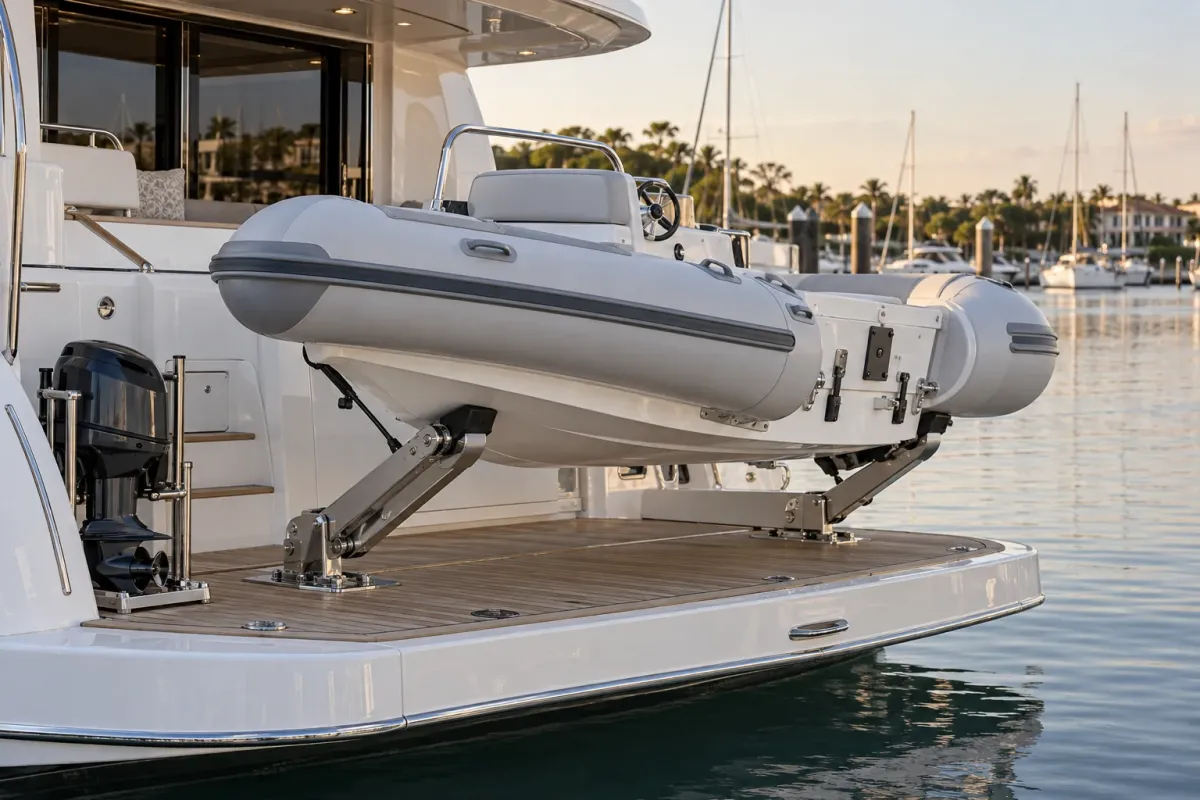
Find the rated capacity and operating instructions for your exact davit, crane or tender lift. Calculate the carried configuration from the tender’s actual weight plus the fitted motor, battery or fuel, cover, cradle components and every item that remains aboard while it is lifted. Do not use a bare hull weight as the load figure.
Also confirm that the yacht’s swim platform or support structure is approved for the tender and lifting arrangement. Davit capacity alone does not confirm that the platform, attachment points or installation geometry are suitable. Ask the yacht builder or a qualified installer to confirm the complete system. Follow the lift maker’s instructions on sling position, tie-downs, removing loose equipment and keeping people clear during lifting.
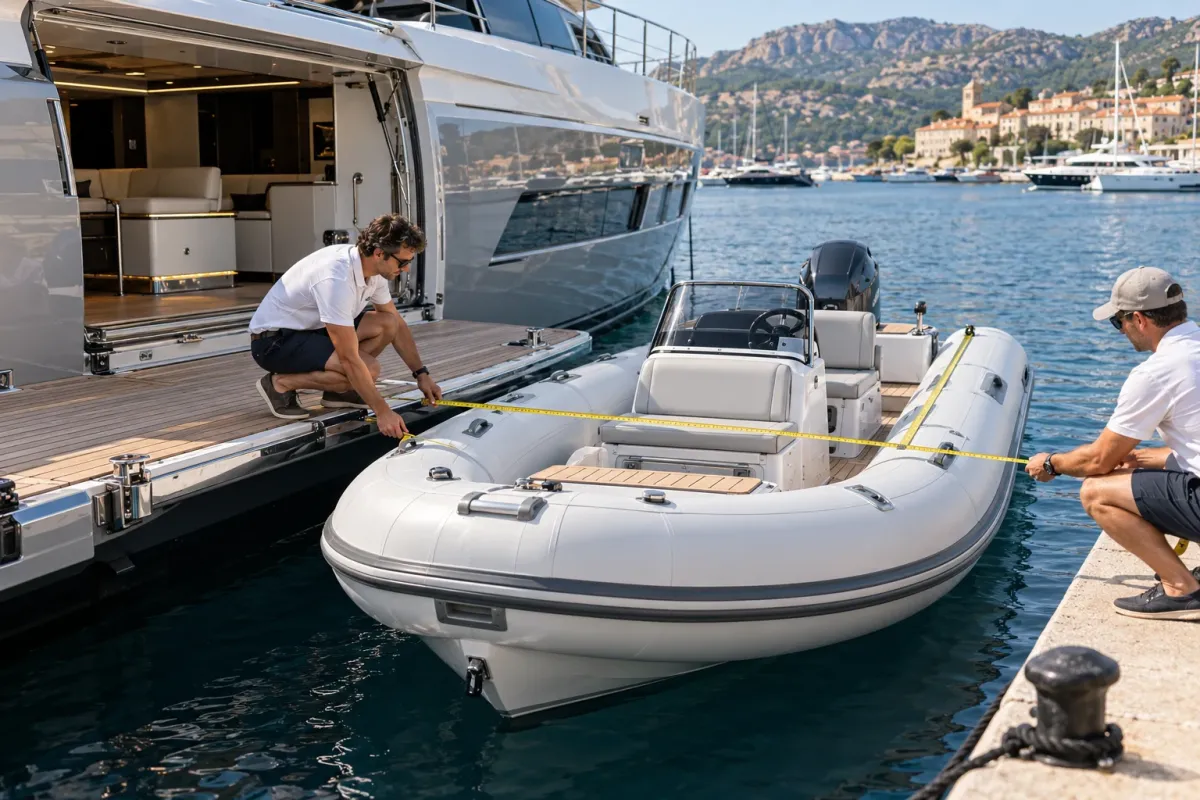
For a garage or deck chocks, measure the clear opening and interior at several points. Record length, beam, height, hatch or door clearance, engine position and the space required to handle the tender. Include fixed items such as rails, hinges and chocks. For a tender that folds, use its packed dimensions and test whether the crew can carry it along the real route to the water.
Choose Propulsion for the Mission
Match propulsion to distance, load, speed and charging or refuelling access. For a short harbor shuttle, a modest outboard may be adequate. Longer or rougher routes can require a different hull and power package. Ask the tender builder to confirm the permitted motor range, maximum motor weight and recommended setup for the load you expect.
For electric propulsion, compare battery capacity, charging time, battery removal weight, replacement availability and the manufacturer’s range test conditions. Range at low speed can differ greatly from range at full throttle, and passenger load, current and wind can change the result. For combustion propulsion, compare fuel capacity and consumption at the speeds you will actually use, along with maintenance and safe fuel storage.
Do not select solely by horsepower or a claimed top speed. Request a demonstration or owner’s manual for the exact hull and engine pairing. Ask the dealer to provide the motor’s performance data for a tender with a comparable load.
Test Boarding, Launching and Recovery
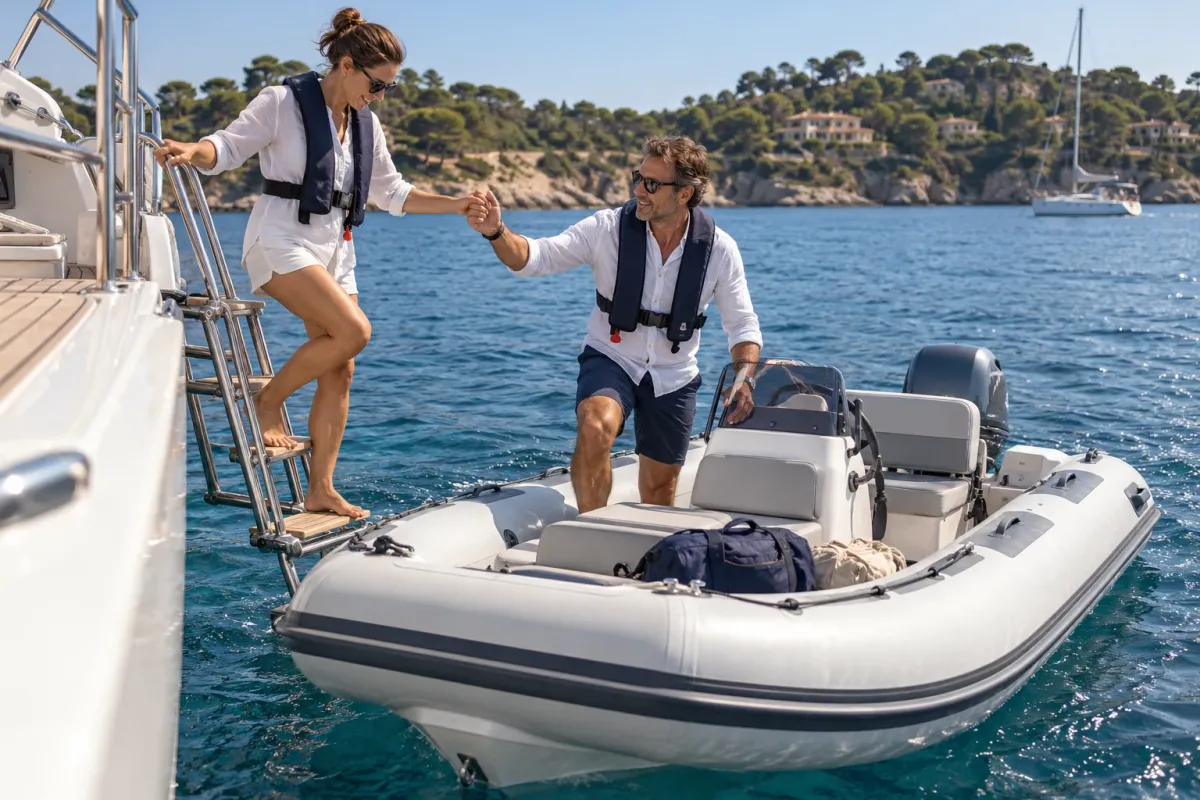
Use a practical demonstration to find small problems before they become daily annoyances. Practice getting in from the yacht, returning from the water, loading the largest expected group and stowing the motor or gear. Check the boarding ladder, handholds, freeboard, transom access and whether the tender can be moved without blocking a passerelle or swim platform.
Run the boat with a representative load in conditions that match the planned use, with a qualified operator and suitable safety equipment. Check visibility from the helm, passenger comfort, turning, stopping, low-speed control and the way the hull behaves when passengers move. Do not use a calm-water trial as proof that a tender is suitable for an exposed passage.
Finally, practice launching and recovering the tender using the yacht’s actual equipment. Confirm the sling or hard points are compatible, the tender clears rails and transom fittings, and the crew can secure it as the lifting-system manual requires. A good tender should be manageable at the end of a long day, not only on a sunny boat-show dock.
A Short Tender Selection Checklist
- Write down the main routes, water conditions and largest typical group.
- Compare roll-up, intermediate-floor and RIB designs against real storage and use.
- Check capacity plate, maximum engine power and permitted engine weight.
- Calculate the fully equipped lifting weight from model-specific data.
- Confirm davit rating, platform structure, sling points and installation with the relevant suppliers.
- Measure every garage opening and the tender’s full dimensions, including motor and accessories.
- Compare propulsion range at your likely speed, plus charging or fuel and service requirements.
- Try boarding, loading, launch and recovery before ordering.
Frequently Asked Questions
How big should a yacht tender be?
Choose the smallest boat that safely and comfortably carries your normal passenger group and gear while meeting your route and handling needs. Its size must also fit the yacht’s garage, platform or davits.
Can I choose a tender from passenger capacity alone?
No. Check the maximum load, engine limits and how the maker defines those figures. People, gear, motor, fuel, water and battery weight can each affect the allowable configuration.
Is a RIB always better than a soft inflatable?
No. A RIB can suit frequent use and more demanding trips, while a roll-up may work better where compact storage and portability are the priorities. The right choice depends on your route and mothership.
What should I give a tender dealer before requesting a quote?
Provide the yacht model, usable garage or platform dimensions, davit or crane rating, passenger and gear load, preferred range, motor type and any existing lifting or charging equipment. Ask the dealer to confirm compatibility in writing.
Sources and Method
Research checked October 15, 2026. Product specifications apply only to the named models and configurations. This guide does not determine safe working loads or certify a tender, davit, platform or installation. Use the current manuals, ratings and vessel-specific advice for your yacht.