Yacht Windlass Guide: Anchor Winch, Chain and Installation Checks
Choose and maintain a yacht windlass by checking the anchor rode, gypsy, deck structure, electrical supply and safe operating procedure as one system.
Research checked: October 15, 2026
Choose and maintain a yacht windlass by checking the anchor rode, gypsy, deck structure, electrical supply and safe operating procedure as one system. This guide focuses on practical decisions, vessel-specific checks and the questions to resolve before spending money or changing an onboard system. Use the manufacturer’s current manual and a qualified marine professional for installation and safety-critical work.
Treat the windlass as part of an anchoring system
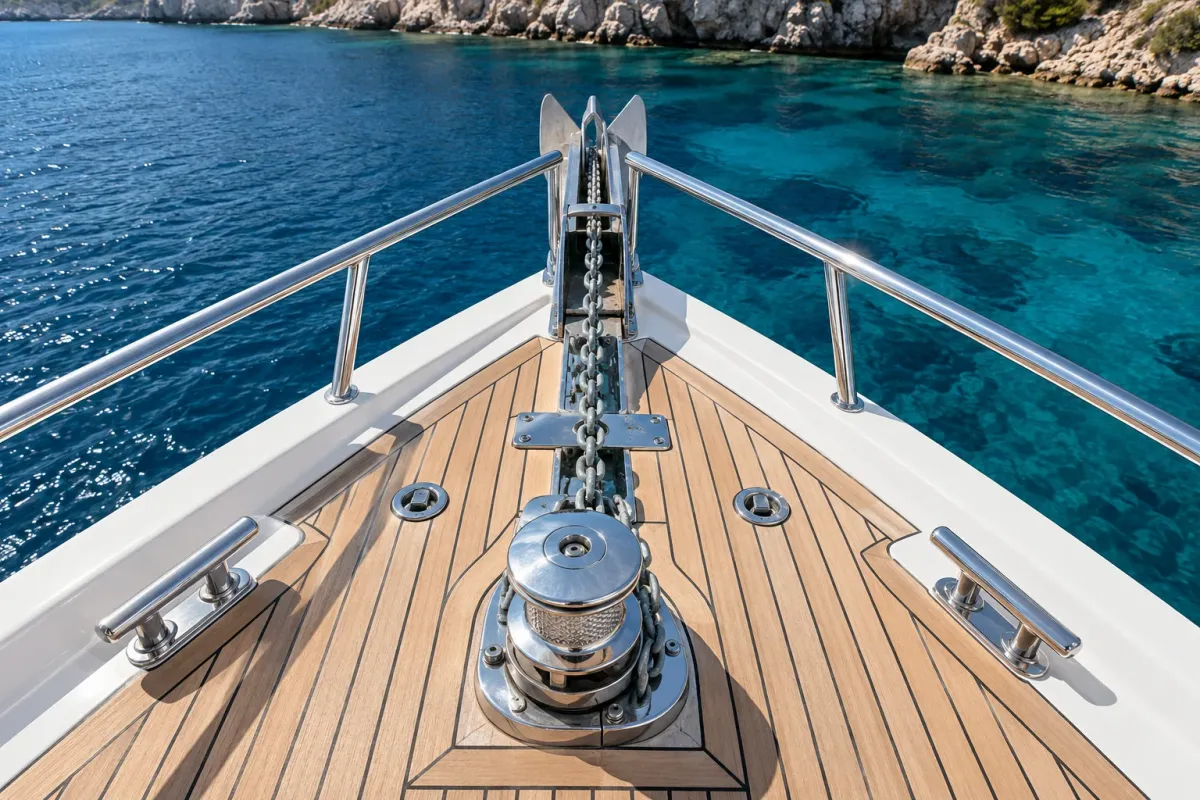
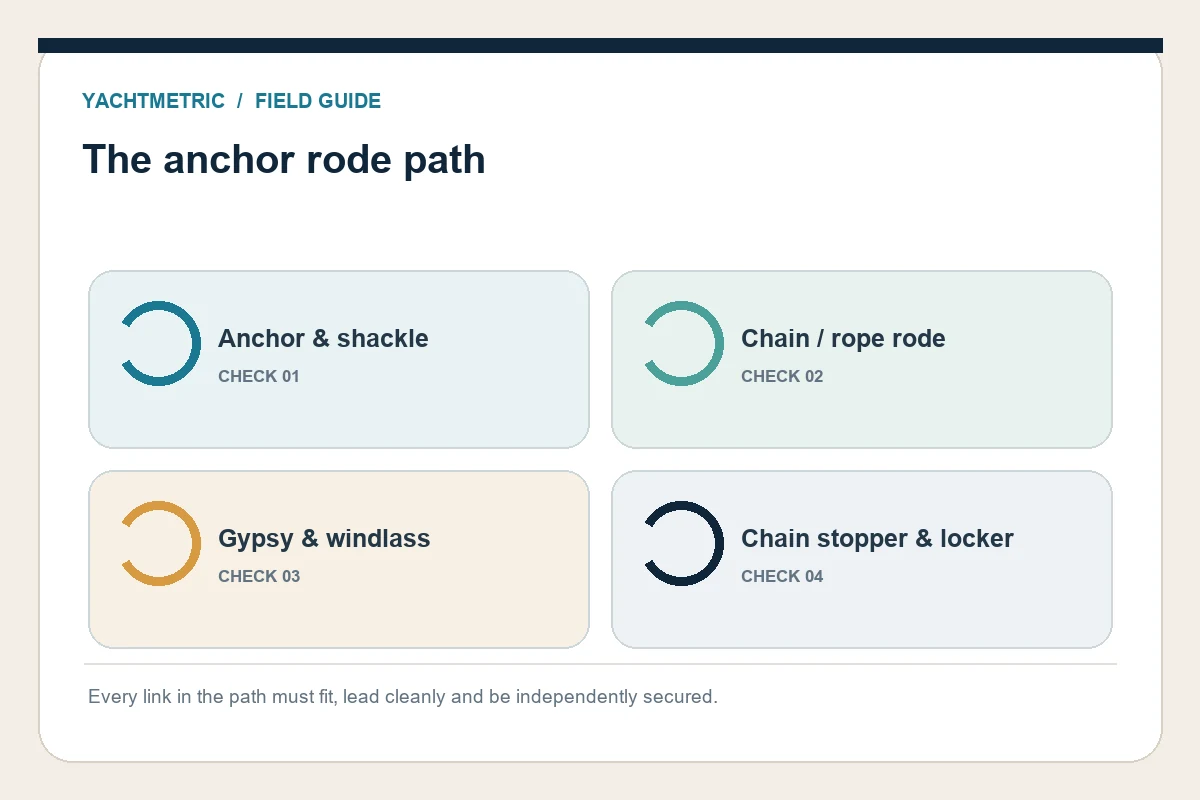
A windlass raises and lowers the anchor rode; it does not make an undersized anchor, poor holding ground or unsafe anchoring plan reliable. The complete system includes the anchor, shackle, chain or rope-and-chain rode, bow roller, windlass, chain stopper, locker and the deck structure carrying the loads. Check the vessel’s manual and the windlass maker’s guidance before changing any component.
Start with the rode actually carried aboard. Record chain diameter and grade, rope diameter and construction, splice type, total length and anchor weight. Inspect the chain for wear and corrosion, the splice for damage, and the bow roller for a fair lead. A rode that jams, piles in the locker or pulls at an angle can undermine an otherwise suitable windlass.
Match chain or rope to the gypsy
The gypsy is the shaped wheel that grips a particular chain or rope-and-chain combination. Compatibility can depend on chain standard, pitch, link dimensions and rope diameter. Match the exact rode to the windlass model using the manufacturer’s compatibility table. Do not assume that chain of the same nominal diameter from different standards will engage equally well.
Lewmar’s V1–V6 manual lists specific rode and model requirements and recommends matched rode for safety and performance. Some models handle rope-and-chain combinations while other models are chain-only. If replacing the chain, take the old section and the gypsy model information to a qualified supplier and confirm the fit before committing to a full length.
Check the deck, locker and chain fall
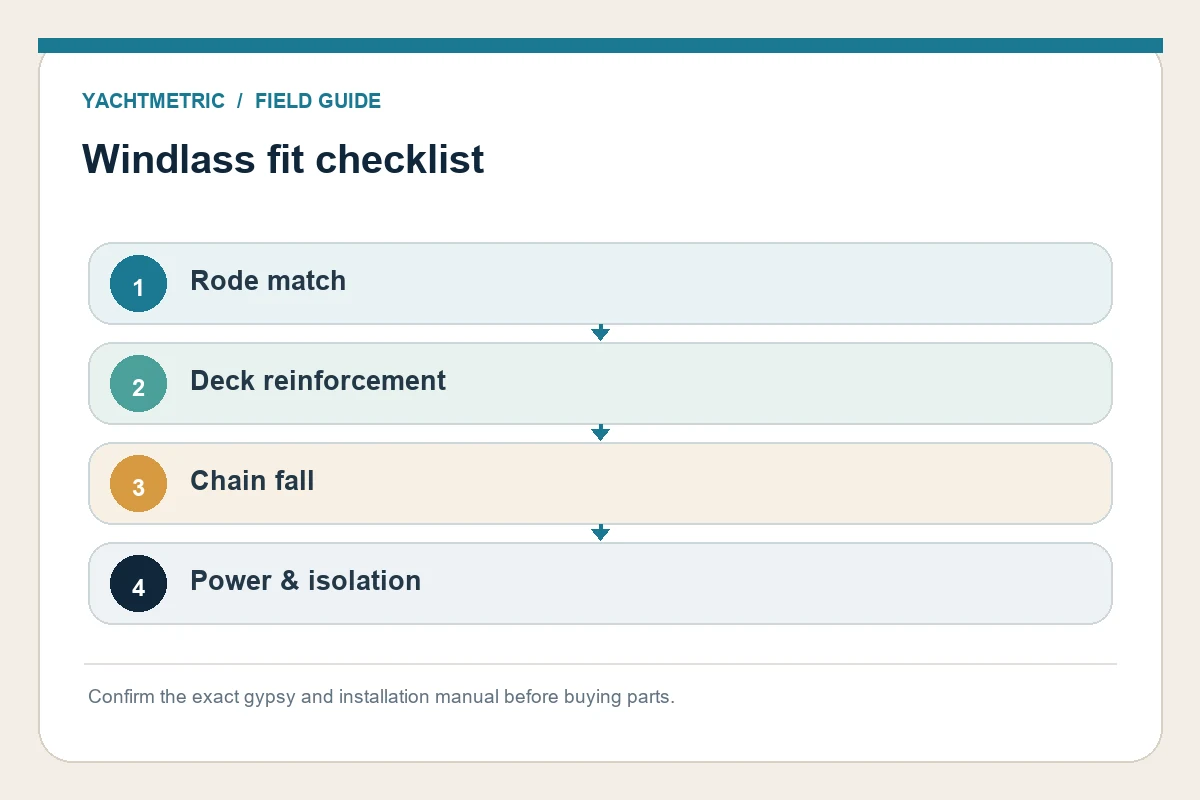
The installation needs a sound mounting area, backing structure and suitable sealing. The chain must fall freely into the locker without striking the motor, piling under the gypsy or fouling other equipment. Confirm access below deck for fasteners, wiring, service and drainage. On a refit, inspect for water ingress or movement around the existing base before installing a larger unit.
The chain stopper or another designed securing point should take the anchor load when the yacht is at anchor or underway. Do not leave the windlass gearbox carrying the vessel’s full anchoring load unless the maker expressly specifies that use. Keep hands, feet and loose clothing clear of the chain path; use the controls from a position with a clear view of the bow and rode.
Budget power and controls correctly
Electric windlasses draw substantial current, so cable run, voltage, circuit protection, isolator and battery condition are part of sizing. Use the installation manual for conductor and fuse recommendations for the exact model and actual round-trip cable length. A slow or stalled windlass may indicate excess load, voltage loss, a jam or a mechanical fault; do not simply install a larger fuse.
Get the installer to document the power route, protection, control locations and emergency manual operation. Test the foot switches or remote controls only when the bow area is clear and a designated person is watching the rode. Agree on hand signals or radio communication between helm and bow before raising anchor in a crowded anchorage.
Make inspection part of seamanship
Before a passage, check the anchor is secured, the chain stopper is engaged as designed and the windlass is isolated if the manual calls for it. Inspect fasteners, seals, wiring, connectors, gypsy wear and the condition of the rode. Wash salt and grit away using the maker’s procedure. Keep a manual retrieval method available and know how to use it without creating a pinch hazard.
During operation, let the boat move slowly toward the anchor rather than using the windlass to haul the yacht forward. If the anchor is heavily loaded, relieve the load with the engine and follow the equipment instructions. Record chain replacement, service and any jams in the maintenance log. Good preparation prevents a routine anchoring task from becoming an avoidable deck emergency.
Practical next step
Before acting, identify the exact yacht, installed equipment and operating area. Gather its manuals, service records and a few clear installation photos, then ask a qualified supplier or technician to confirm the details that apply to that vessel. Keep the answer and any test results with the yacht’s maintenance records.