Marine Toilet Systems: Electric vs Manual, Holding Tanks and Care
Compare manual and electric marine toilets by water source, holding-tank layout, power use, maintenance access and safe through-hull arrangements.
Research checked: October 15, 2026
Compare manual and electric marine toilets by water source, holding-tank layout, power use, maintenance access and safe through-hull arrangements. This guide focuses on practical decisions, vessel-specific checks and the questions to resolve before spending money or changing an onboard system. Use the manufacturer’s current manual and a qualified marine professional for installation and safety-critical work.
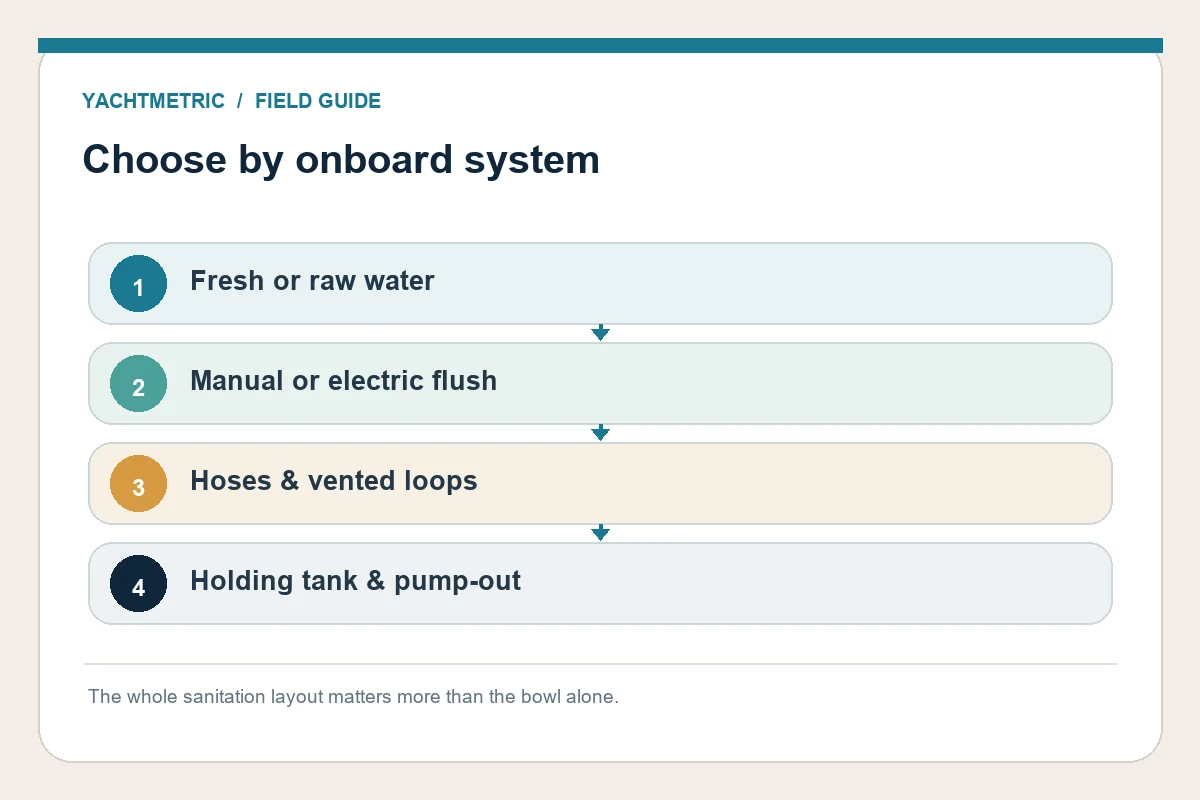
Compare the system, not only the toilet
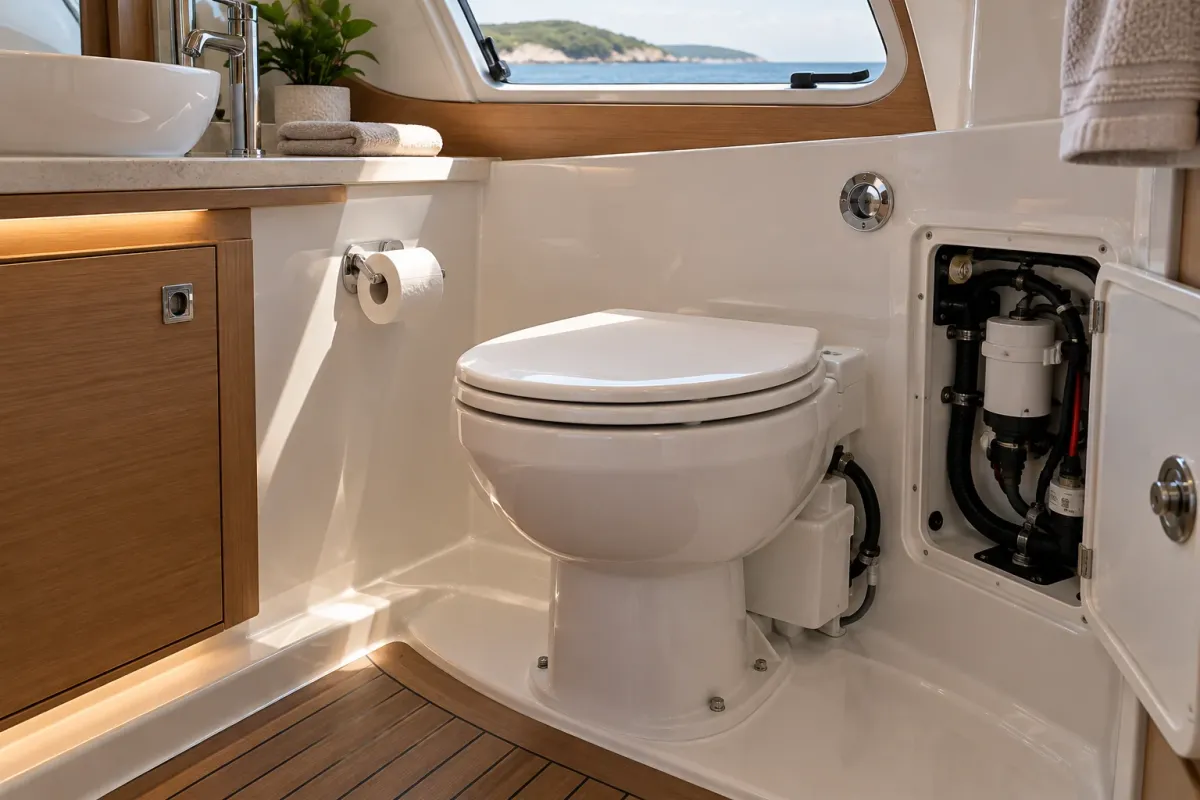
A marine toilet choice affects freshwater demand, electrical load, noise, plumbing, holding-tank layout, service access and the way guests use the boat. Manual toilets use a hand pump; electric models use a motor and controls, and some macerate waste before moving it to a tank. Decide how the yacht is used, how many people are aboard and where the waste will be stored and discharged legally.
Check the space available for the bowl, pump, service access and hose bends. A compact unit may fit the footprint but leave no room to remove a valve or service the macerator. Confirm the electrical voltage and current for the exact model, and compare freshwater versus raw-water flushing only where the maker supports the chosen configuration.
Understand the water and plumbing route
Draw the intake and discharge path, including seacocks, strainers, pumps, vented loops, holding tank, vent filter, deck pump-out and any overboard option. Through-hull connections need accessible, suitable seacocks and hose arrangements appropriate to the installation. Vented loops may be required where the bowl or piping can fall below the waterline under heel, trim or loading.
Dometic’s MasterFlush manual calls for marine sanitation hose and correctly secured connections, and emphasizes closing seacocks and isolating power before service. Exact instructions differ by toilet and vessel layout. Have a qualified marine technician review the route, especially if the toilet has an overboard discharge or the waterline changes with heel.
Compare water use and energy
A manual toilet can reduce electrical demand but requires correct operation and regular attention to seals and pump components. An electric flush can be easier for guests and may offer controlled water use, while adding wiring, fusing, motor and control components. A macerator can make waste transfer easier for a particular tank layout, but it does not remove the need for a correctly sized holding tank or lawful disposal.
Use the manufacturer’s water-use and electrical data for the precise model. Estimate daily flushes for the number of people aboard, then compare freshwater consumption or raw-water pumping with the yacht’s available supply. On battery-powered trips, measure or calculate load from the specified current and actual run time rather than assuming a nominal flush is negligible.
Protect against leaks, odors and blockages
Use only products approved by the toilet manufacturer and avoid putting wipes, sanitary products, paper towels or other unsuitable material into the bowl. Odor can arise from permeated hoses, a blocked vent, a full tank, poor flushing practice or a failed seal. A vent filter has a service interval and may need replacement; it will not correct every plumbing fault.
Inspect clamps, hose surfaces, tank vents, pump seals, wiring and the bowl’s water supply during routine service. Dometic warns that an overfilled holding tank can damage the system and recommends a tank-full shut-down arrangement for specified configurations. Follow the exact tank sensor and relay design rather than improvising a control circuit.
Plan pump-out and maintenance
Know the local rules for sewage discharge before leaving the berth. Restrictions differ by country, protected area, vessel type and location, and some regions prohibit discharge even when a system technically permits it. Label valves and controls clearly so the crew understands the legal operating mode for the waters being visited.
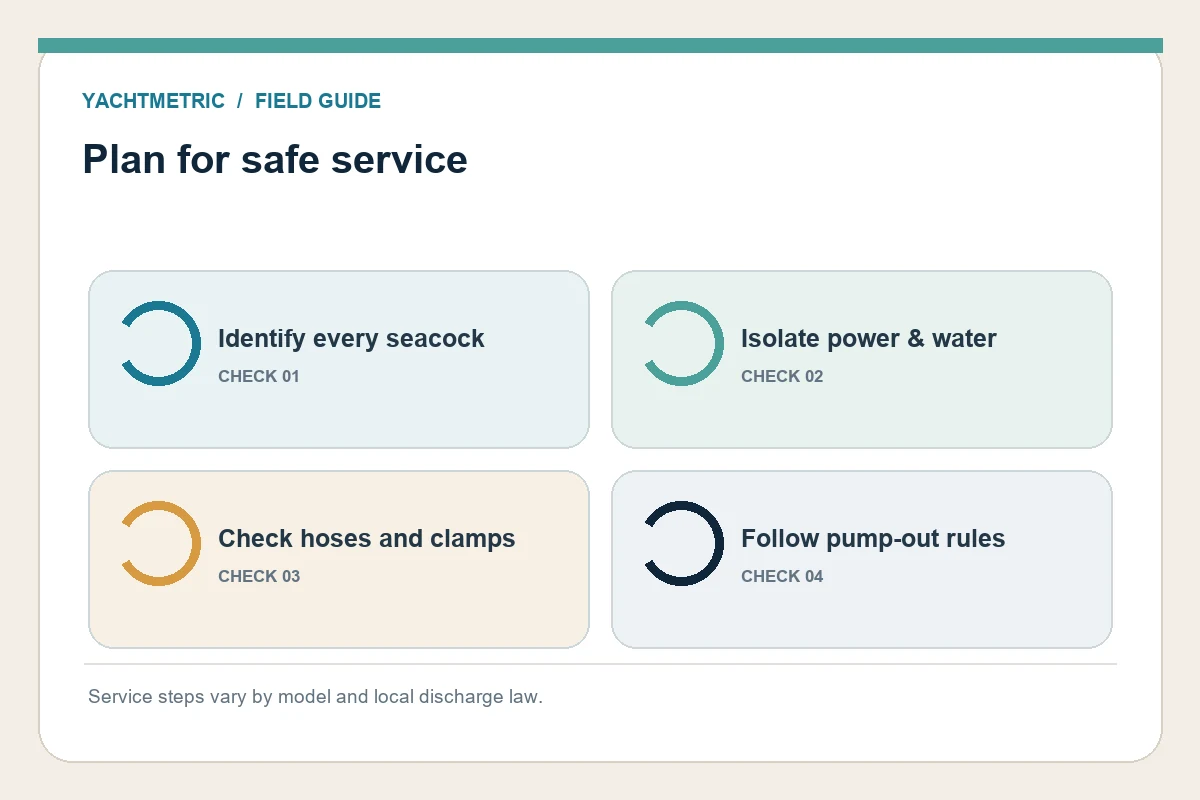
Keep the operating and service manual aboard. Before maintenance, isolate electrical power and close the relevant seacocks as the maker specifies. Use the recommended winterizing process and compatible replacement parts. If a through-hull fitting, hose, tank or wiring is deteriorated, treat it as a safety and pollution-control issue and have a qualified technician assess it promptly.
Practical next step
Before acting, identify the exact yacht, installed equipment and operating area. Gather its manuals, service records and a few clear installation photos, then ask a qualified supplier or technician to confirm the details that apply to that vessel. Keep the answer and any test results with the yacht’s maintenance records.