Yacht Generator Cost
How much does a yacht generator cost? Compare equipment prices, installation expenses, diesel fuel use and maintenance, plus how to choose the right generator size.
Research checked: October 15, 2026
A yacht generator budget has three parts: the equipment, the work needed to install it aboard the boat, and the fuel and service it will consume. A low advertised generator price may cover none of the exhaust work, electrical switching, lifting or commissioning that determines the finished invoice.
This guide explains yacht generator cost with dated equipment listings, a transparent installation example and an annual operating worksheet. It focuses on permanently installed diesel marine generators for onboard electrical power. Match any proposal to your yacht's voltage, frequency, electrical loads and intended cruising pattern.
Yacht Generator Cost: Quick Answer
As dated US-dollar equipment examples, Bob and Annie's Boatyard listed a Phasor Compact K3-6.5KW at a base price of $10,175 and a K3-8.0KW at $11,020 when checked on October 15, 2026. The listings carry a 2025 product label. These are advertised base prices from one seller, not market averages or complete installation quotes; confirm availability, configuration, enclosure, taxes, freight and current pricing.
The manufacturer's 60 Hz model directory identifies these compact models. A 60 Hz price should not be used to budget a different 50 Hz package without confirming the specification and quotation.
| Cost layer | What belongs in it |
|---|---|
| Generator package | Exact model, continuous output, frequency, voltage, starting system and included accessories. |
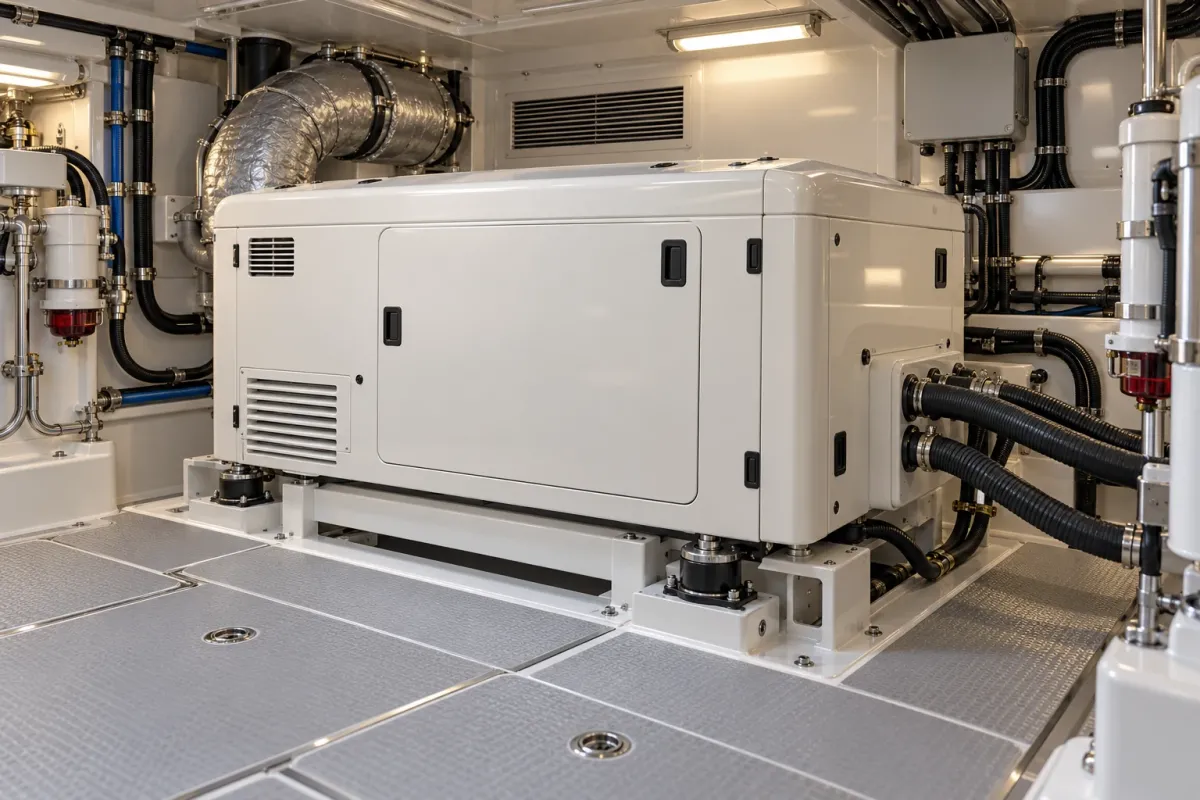
| Marine installation | Mounting, access, cooling, exhaust, fuel connections, electrical distribution and controls. |
| Commissioning | Inspection, functional tests, loaded operation, documentation and operator handover. |
| Annual ownership | Fuel, scheduled service, repairs, storage procedures and any reserve for major work. |
To compare proposals, ask each installer for the same scope and exclusions. A quote with an acoustic enclosure and complete exhaust system is a different purchase from a bare generator set.
A Worked Installed-Cost Budget
Every number in the following budget is an invented planning allowance in US dollars. It demonstrates the structure of an invoice and does not estimate the installation of either Phasor model above.
| Illustrative item | Allowance |
|---|---|
| Generator equipment | $10,500 |
| Acoustic enclosure and accessories | $1,500 |
| Fuel, cooling and exhaust materials | $1,800 |
| Electrical distribution and controls | $1,200 |
| Installation and commissioning labor | $3,500 |
| Removal and lifting | $900 |
| Illustrative subtotal | $19,400 |
This subtotal excludes taxes, freight, major structural alterations, difficult joinery removal and unrelated repairs discovered during the refit. Check whether a proposed enclosure or control panel is already included in the equipment price before adding it again.
A replacement may reuse some compatible equipment, while a first installation may need new routes and supporting systems. Reuse must be assessed rather than assumed: an old exhaust, cable or mounting arrangement may not suit the new generator. Request access photographs and a written plan for getting both units through the machinery-space opening.
What Size Generator Does Your Yacht Need?
Build a list of simultaneous electrical loads rather than selecting only by yacht length. Record AC input power, voltage and frequency, plus motor-starting demand. Battery-charger output power is not the same as its AC input; use the equipment's input data or measurements.
For an invented load-planning example:
| Assumed load | AC input while operating |
|---|---|
| Air conditioning | 1.8 kW |
| Battery charger | 1.2 kW |
| AC watermaker | 0.7 kW |
| Galley appliance | 1.5 kW |
| Other AC loads | 0.3 kW |
| Assumed simultaneous total | 5.5 kW |
Delaying the 1.5 kW galley appliance reduces that example's running total to 4.0 kW. It does not establish a suitable generator rating: starting currents, power factor, temperature, manufacturer limits and future equipment still need assessment. Request a documented load analysis and a demonstration with the yacht's real equipment.
The Fischer Panda 5000 AC page illustrates why precise ratings matter. It lists 5 kW nominal for its 60 Hz version, while the 50 Hz specification distinguishes 4.8 kW peak from 4.2 kW continuous output. Treat the exact version's continuous rating and starting capability as the relevant specifications, rather than inferring them from the model name.
Fuel Consumption Depends on Load
Ask for the exact model's fuel data at several loads, then compare it with your likely operating schedule. A single litres-per-hour number without output, speed and test conditions provides little basis for a budget.
As a manufacturer example, the Northern Lights M673LD3G specification sheet, hosted in its 2022 document archive, lists approximate consumption of 1.2 litres/hour at half load and 2.2 litres/hour at full load at 1,800 rpm. That sheet identifies the 60 Hz output as 5 kW and warns that actual consumption varies with operating conditions. These are figures for the named model and configuration, not universal rates for all 5 kW generators or a specification for a newer replacement model.
For your yacht, log generator hours, operating loads and measured fuel use across representative trips. Keep propulsion fuel separate where possible. Our yacht fuel cost guide explains how consumption and hours feed into the wider cruising budget.
Calculate Annual Running Cost
Annual generator fuel cost = operating hours × average fuel consumption × fuel price. Use consistent units and include all periods the generator runs, including battery charging. The following scenario uses entirely selected assumptions, independent of the Northern Lights example.
| Hypothetical input or result | Value |
|---|---|
| Annual generator operation | 300 hours |
| Assumed average consumption | 1.5 litres/hour |
| Assumed diesel price | $1.60/litre |
| Calculated fuel volume | 450 litres |
| Calculated annual fuel cost | $720 |
| Assumed scheduled service | $450 |
| Selected repair reserve | $300 |
| Fuel, service and reserve allocation | $1,470/year |
Under those assumptions, the allocation is $4.90 per running hour. A repair reserve is money set aside; it is not necessarily an annual invoice. The example excludes purchase cost, financing, depreciation and major failures. If the assumed diesel price rises to $2.00/litre, fuel becomes $900 and the combined allocation becomes $1,650.
If this hypothetical generator supplies an average 2.5 kW for 300 hours, it delivers 750 kWh. Dividing the $1,470 allocation by 750 gives $1.96/kWh before capital costs. That is an illustrative delivered-energy calculation, not a tariff or a general marine-generator efficiency claim. Lower useful energy output can increase cost per kWh even when hourly fuel use falls.
Installation: Request the Complete Scope
Have a qualified marine installer assess the generator's physical location and every supporting system. Ask the proposal to identify:
- The equipment lifting route, foundation, installed weight and service clearance.
- Cooling-water arrangements, ventilation and the approved exhaust design.
- Fuel supply, return and filtration requirements.
- Starting-battery arrangements and compatibility with existing controls.
- AC protection, earthing or grounding, and switching between power sources.
- Acoustic treatment, vibration control and access to routine service items.
- Commissioning tests, drawings, exclusions and responsibility for follow-up work.
Westerbeke's document library directs owners to model manuals and recommends installation and service by an authorized distributor or dealer. Ask your chosen installer to use the current documentation for the exact supplied unit. The budget should include any necessary surveys or approvals for your vessel and operating area.
Include exhaust inspection and suitable carbon-monoxide alarms in the assessment. The U.S. Coast Guard's boating guidance advises maintaining alarms, ensuring fresh-air circulation and keeping people away from engine and generator exhaust outlets. Exhaust from a nearby vessel also matters; a sound enclosure does not provide protection against exhaust exposure.
Noise and Vibration: Compare the Conditions
Fischer Panda publishes a sound figure of 54 dBA at seven metres for the 5000 AC. This is a manufacturer-published figure at a stated distance, not an independent measurement inside a yacht's sleeping cabin. Confirm the test load, enclosure and installation conditions before comparing it with another product.
For a refit decision, ask to hear a similar installation under load. Consider cabin location, mounting, panel vibration, exhaust noise and the hours you intend to operate. A quieter result can depend on the installation as much as on the enclosure specification. Ask whether acoustic work will preserve required cooling and maintenance access.
Maintenance: Budget by Hours and Calendar
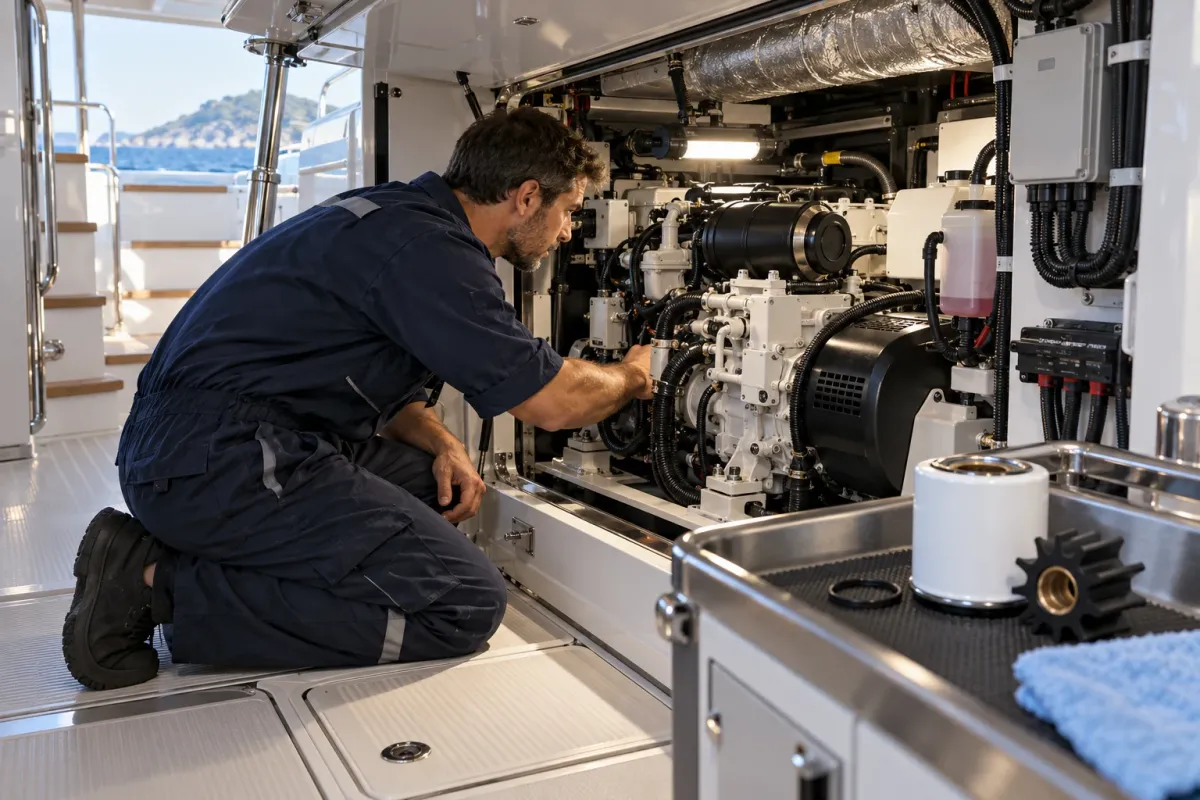
Northern Lights' maintenance guidance covers routine oil and coolant checks, filters, seawater-pump components and exhaust inspection. It also cautions against sustained light loading and recommends using the model's maintenance instructions. Its guidance is specific to its equipment; do not apply one brand's intervals or parts requirements to every generator.
Get a written seasonal service estimate listing parts, fluids, labor, technician travel and access work. Ask about the next major tasks at the generator's current hours and age, rather than pricing only the next oil change. Check how winterization or long idle periods affect the schedule. Carry model-specific spares appropriate to the intended cruising area and follow the manufacturer's storage procedures.
Include generator work in your yacht maintenance budget. For a used yacht, request cold-start and loaded-operation checks, service records and a machinery inspection as part of the pre-purchase survey. Generator hours help describe use, but do not establish condition on their own.
Generator or Lithium Batteries?
A generator produces electrical energy from fuel. A battery stores energy that must be replenished. Compare complete operating plans for the same loads, time at anchor and recharge opportunities.
For a simple hypothetical quiet-evening scenario, a 0.4 kW average battery-side load over eight hours uses 3.2 kWh. The bank needs adequate usable capacity, reserve and peak power, and the yacht needs a practical way to replace that energy. Adding air conditioning or other large loads can change the calculation substantially.
A lithium house-battery upgrade may let you move some generator operation to daytime charging sessions. Count the fuel and servicing still required for that charging. A system that shifts operating hours is not automatically a system that eliminates them. Our solar panel guide helps assess how much daily generation a roof array can realistically contribute.
Compare three proposals when practical: maintaining the present generator, replacing it, and combining a suitable generator with improved storage and load management. Keep comfort benefits separate from assumed cash savings. Enter actual fuel and service quotations in the annual yacht cost calculator.
Frequently Asked Questions
How much does it cost to install a yacht generator?
The total depends on the equipment and the work aboard the particular boat. This guide's $19,400 installation subtotal is a hypothetical worksheet, not a typical installed-price claim. Obtain a line-item proposal after an onboard assessment.
Will a 5 kW generator run air conditioning?
It depends on continuous electrical demand, compressor startup, simultaneous loads and the generator's exact rating. Use appliance input data and the supplier's starting-load assessment.
How much diesel does a marine generator use?
Consumption varies with the model and load. Use manufacturer data for the named configuration and refine the estimate with measured operation aboard the yacht.
Can solar panels and batteries replace the generator?
Only if generation, storage and power capability meet the complete operating plan. Compare daily energy demand with seasonal charging opportunities and allow appropriate reserve.
Sources and Method
Research was checked on October 15, 2026. Advertised prices are dated seller listings, and manufacturer specifications apply to the named model and configuration. The installation budget, annual usage, diesel prices, service allowances and battery scenarios are explicitly hypothetical. YachtMetric has not conducted an independent installation-price survey, fuel test or sound test for this guide.
- Bob and Annie's Boatyard: dated Phasor base-price listings.
- Phasor Marine: 60 Hz model directory.
- Fischer Panda: 5000 AC ratings, versions and published sound figure.
- Northern Lights: M673LD3G marine specification sheet and approximate fuel data.
- Northern Lights: maintenance and loading guidance.
- Westerbeke: installation and service documentation.
- U.S. Coast Guard: carbon-monoxide protection aboard boats.