Used Yacht Survey Checklist: What to Inspect Before You Buy
A pre-purchase yacht survey helps you understand a vessel’s condition before closing. Learn what to prepare, what a survey may cover, which specialists to consider and how to turn findings into a realistic first-year budget.
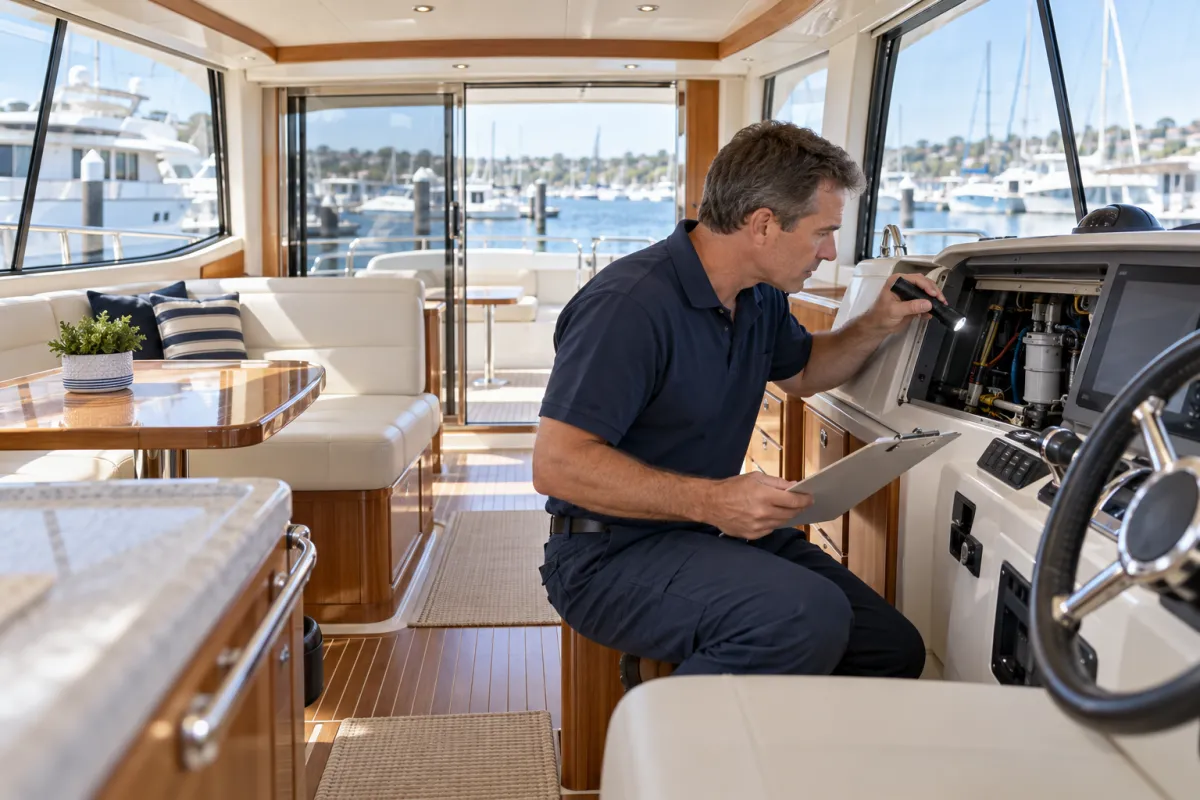
A used-yacht survey is an independent assessment of a vessel’s condition at the time of inspection. It can help you identify significant defects, understand upcoming work and decide whether the yacht fits your plans and budget. It is not a guarantee that every defect will be found, and a general survey may not include detailed engine diagnostics, rigging inspections, or areas that cannot be accessed.
Before you make an offer unconditional, ask what the survey will cover, confirm that your insurer and lender will accept the surveyor and report, and agree how the inspection, haul-out and trial run will be arranged. The exact process varies by vessel, location, contract and surveyor.
What is a pre-purchase yacht survey?
A pre-purchase or condition survey is an independent inspection commissioned for the buyer. The surveyor assesses the vessel’s condition within an agreed scope and documents findings, limitations and recommendations. A survey can help you plan repairs and maintenance, but it is not a substitute for specialist checks where a system needs deeper testing.
Ask for the scope in writing before booking. Confirm whether it includes an in-water inspection, an out-of-water inspection, a trial run, valuation, and any specific systems you care about. These may be separate services. A valuation is not automatically included, and the surveyor may exclude cosmetic items or inaccessible areas. Read the report’s limitations carefully.
Before survey day: buyer preparation checklist
- Confirm the surveyor is independent. You should understand who the surveyor’s client is, what the surveyor is being asked to inspect and whether any conflicts exist.
- Check credentials and relevant experience. Look for experience with the yacht’s construction material, type, size and systems. Ask your insurer or lender whether it has surveyor or report requirements.
- Request a sample report. Check that it is clear, identifies the inspection scope and limitations, and separates findings from recommendations.
- Agree the scope and fee in writing. Ask what is included, what is excluded, whether a valuation is included, and how travel, haul-out, launch and specialist services are billed.
- Ask for records in advance. Request available maintenance invoices, engine and generator service records, refit documentation, equipment manuals, registration or title records, and details of known damage or repairs.
- Coordinate access and logistics. Confirm that the seller will make lockers, machinery spaces and systems accessible. Arrange the boatyard, short haul if needed, trial run, captain and weather window with the seller or broker.
- Check the purchase agreement deadline. Make sure the inspection and report review fit within the agreed survey or inspection contingency. Ask your broker or qualified legal adviser about contract wording and local rules.
- Get an insurance indication early. Ask an insurer what survey information it needs and whether the yacht’s location, age, value or cruising plans affect acceptance or conditions.
- Write down your questions. Note how you plan to use the yacht, which systems matter most and any concerns from your viewing.
What to look at during the inspection
The surveyor’s work depends on the agreed scope and the vessel. The following list helps you follow the process and ask informed questions; it is not a do-it-yourself substitute for a qualified surveyor or mechanic.
Hull, deck and structure
Ask the surveyor to explain any signs of water intrusion, cracking, impact damage, previous repairs, corrosion, delamination or movement around structural components and joints. On a fiberglass yacht, moisture readings or sounding may help identify areas for further investigation, but results need interpretation in context. Wooden, steel and aluminum vessels have different inspection needs, so choose experience appropriate to the material.
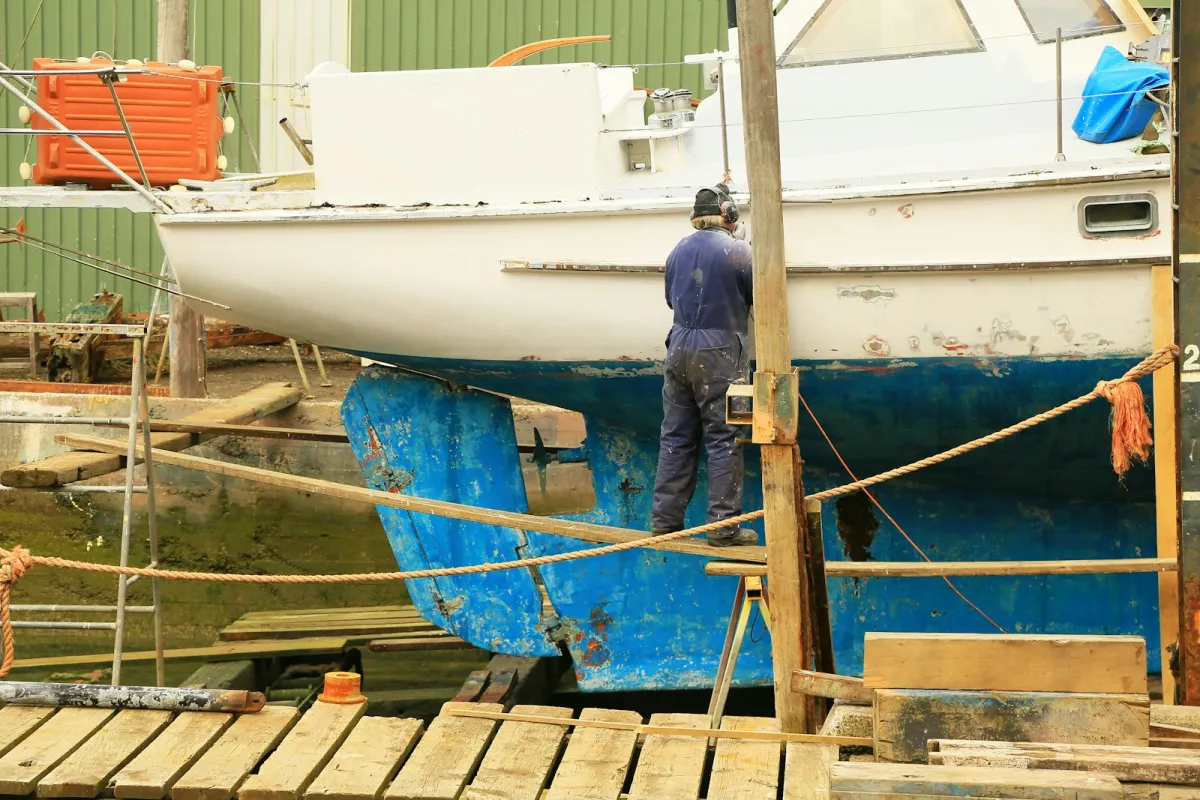
If the hull can be inspected out of the water, ask what the surveyor observes around the bottom, keel, rudder, propellers, shafts, thrusters, trim tabs, through-hulls and anodes. A haul-out and any yard charges should be agreed in advance.
Machinery and onboard systems
Ask what the general survey includes for engines, transmissions and generator. A general condition survey may not provide the same depth as a mechanical inspection by a technician familiar with the specific engine. For a yacht where machinery is a major part of the value, consider asking an appropriate engine specialist about diagnostics, fluid sampling or other tests.
Where accessible and within scope, the survey may review bilges, pumps, batteries, visible wiring, fuel and water systems, steering, controls, plumbing, HVAC, refrigeration, navigation electronics and safety equipment. Ask the surveyor to distinguish between an item that was tested, one that was observed but not operated, and one that could not be inspected.
Trial run
A trial run can let the surveyor observe engine and running-gear operation under way. It is not automatically a heavy-weather sea trial or a performance guarantee. Confirm who will operate the yacht, what systems will be tested, what conditions are safe, and whether the seller has agreed to make the yacht ready. Ask the surveyor what readings or observations will be recorded and what the trial cannot establish.
Sailboat rig and sails
For a sailing yacht, clarify whether the mast, standing rigging, chainplates, sails and running rigging are included. A general survey may not include a mast climb or a specialist rig inspection. If rig condition is important to the purchase, ask whether a qualified rigger should inspect it separately and what access or conditions are required.
Safety, documentation and equipment
Ask the surveyor to identify visible concerns with safety equipment and installed systems within the report’s scope. Separately verify ownership, registration, liens, VAT or import status, coding or commercial-use status, and required certificates with the appropriate professionals and authorities for the jurisdiction. A condition survey does not by itself establish clear title or legal compliance.
How to review the survey report
Read the scope and limitations first. Then sort the findings by what they mean for your decision:
- Safety or structural concerns: Ask the surveyor to explain urgency, risk and what further inspection is needed.
- Major machinery or system issues: Ask whether a specialist diagnosis is recommended before you commit.
- Near-term maintenance and repairs: Request written estimates from suitable yards or technicians rather than treating rough survey comments as firm quotes.
- Routine wear and cosmetic items: Include these in your ownership plan, while distinguishing them from urgent defects.
Ask the surveyor to clarify unfamiliar terms, the evidence behind a finding, and what could not be inspected. If the report recommends further investigation, get that work done before making a decision that depends on the result. The surveyor’s role is to report condition within the agreed scope; repair pricing and legal advice may require other professionals.
Turn findings into a purchase decision and budget
Do not judge the yacht by a single overall impression or assume that every listed item has the same priority. For significant findings, obtain specialist opinions and repair quotes. Then update your offer decision and first-year plan using the vessel’s actual condition, not just its asking price.
Keep one-time catch-up work separate from recurring ownership costs. Add likely near-term repairs, haul-out and specialist inspections to your initial cash plan, then budget ongoing marina, fuel, insurance, maintenance and crew costs separately. YachtMetric’s annual ownership cost guide explains the main recurring categories, and the yacht maintenance guide helps frame routine service and repair reserves.
The survey report can inform a conversation about the purchase, but it does not determine the price or amend your contract. Discuss any requested repairs, price changes, deadlines or cancellation rights with your broker and, where appropriate, a qualified legal adviser. Get any agreed terms in writing.
Frequently asked questions
Is a yacht survey worth it before buying?
A survey can reveal condition issues that are difficult to assess during a viewing and help you plan further inspections and repairs. Whether it is required for insurance or financing depends on the provider and vessel. Confirm requirements before you rely on a particular report.
Does a standard yacht survey include the engine?
The surveyor may inspect visible or operating aspects of the machinery within the agreed scope, but detailed engine diagnostics may require a separate mechanic or engine specialist. Ask exactly what is included and what tests will be performed.
Does a pre-purchase survey include a valuation?
Not necessarily. Condition assessment and valuation can be separate services. Confirm in writing if you need both.
Can I use the seller’s existing survey?
Ask the insurer, lender and your own adviser whether they will accept it. An older report describes the yacht at an earlier point in time and may have a different scope or client. If you need a report for your decision, discuss commissioning your own inspection with an independent surveyor.
What if the survey finds serious problems?
Ask the surveyor what the finding means, whether further inspection is needed and whether a specialist should assess it. Obtain repair estimates, compare the work with your budget and intended use, and review your options under the purchase agreement with your broker or legal adviser.