Yacht Bow Thruster Cost: Installation, Batteries and Maintenance
Understand what drives bow-thruster installation cost, from hull access and electrical supply to controls, commissioning and future service.
Research checked: October 15, 2026
Understand what drives bow-thruster installation cost, from hull access and electrical supply to controls, commissioning and future service. This guide focuses on practical decisions, vessel-specific checks and the questions to resolve before spending money or changing an onboard system. Use the manufacturer’s current manual and a qualified marine professional for installation and safety-critical work.
Why installation quotes vary
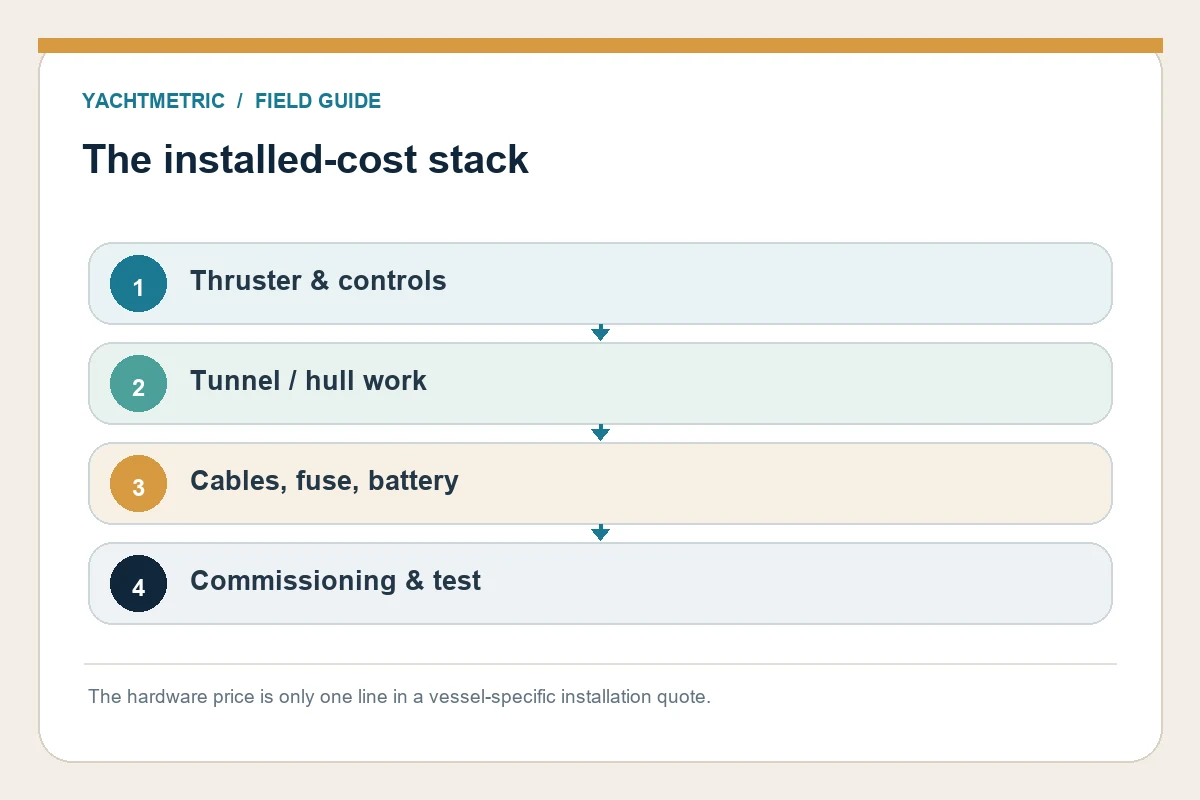
A bow thruster can make close-quarters handling easier, but the total project cost depends on far more than the motor. The quote may include a tunnel, structural reinforcement, fairing and antifouling work, controls, high-current cabling, protection, a battery or charger, labor and commissioning. Access to the bow and the yacht’s construction can change both labor and yard time.
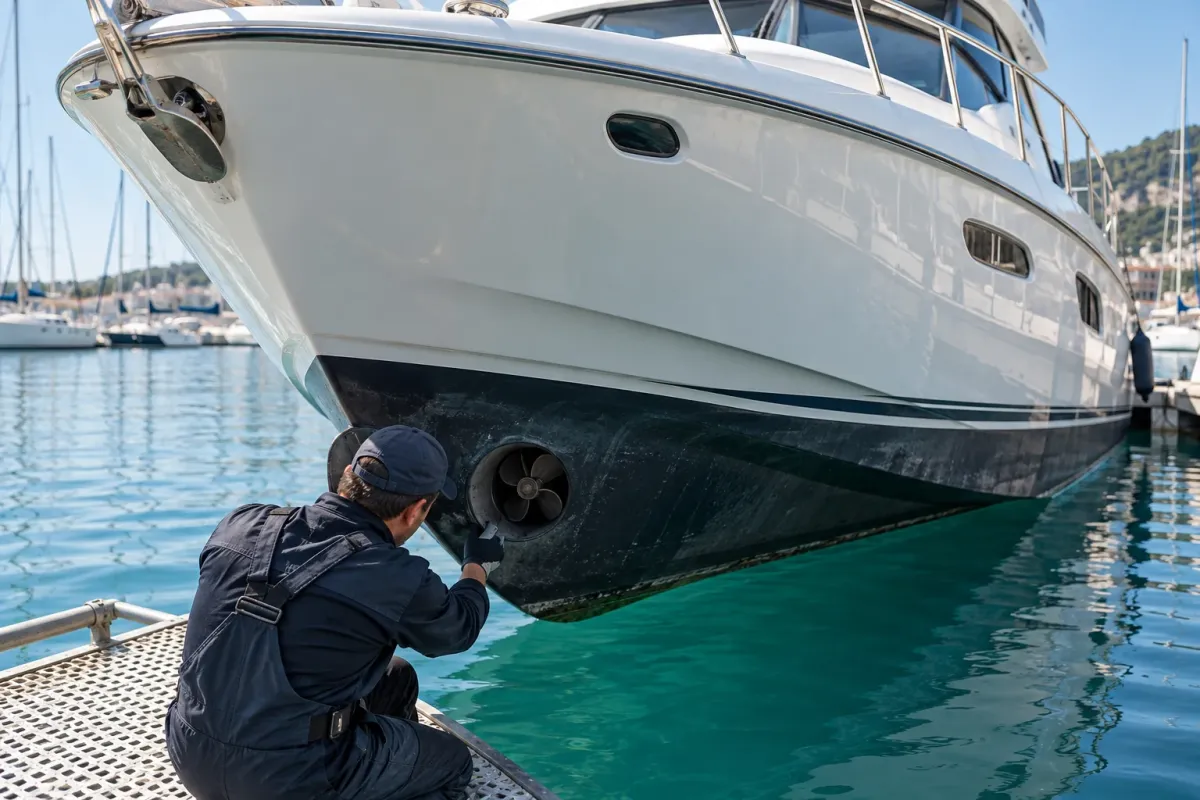
A tunnel thruster requires a correctly placed hull opening and a tunnel shaped and finished for the specific hull. Retractable or external systems avoid some tunnel work but have their own installation, control and service requirements. Get a yard or qualified installer to assess the actual hull before using a generic online price as a budget.
Size for the boat and the maneuver
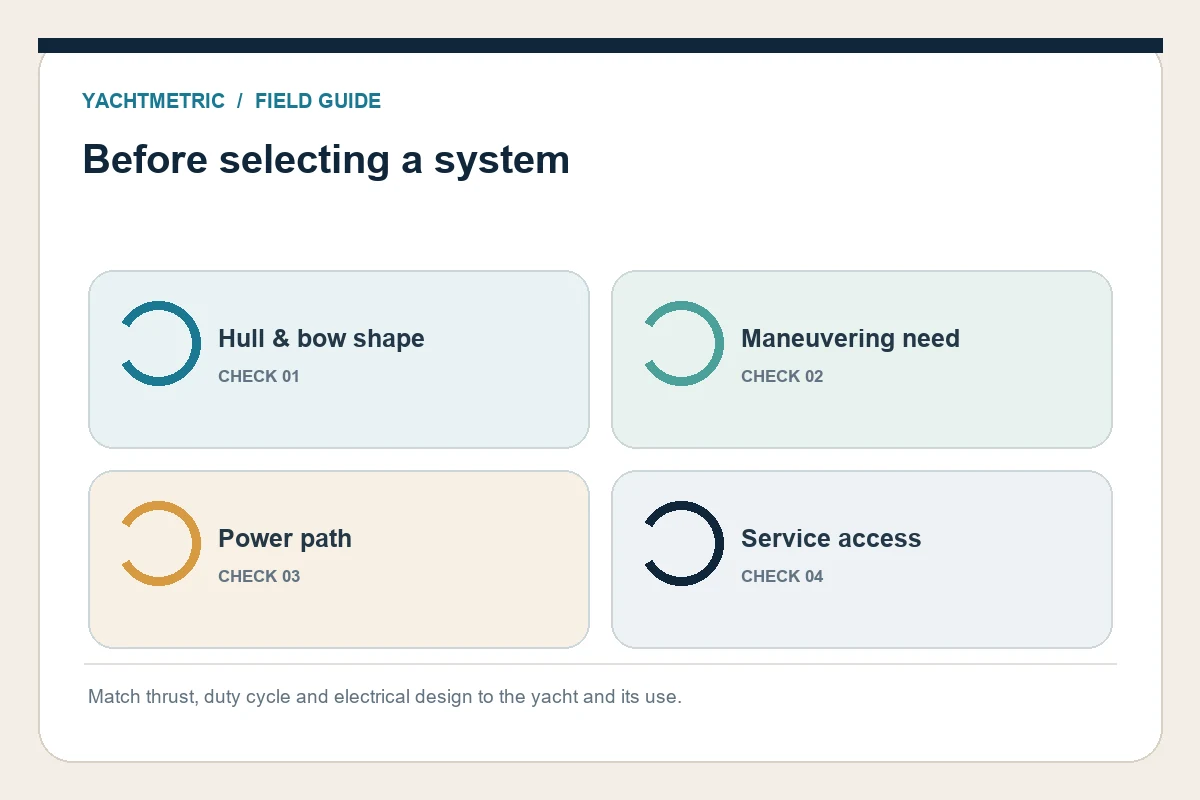
Thruster selection depends on vessel length and displacement, bow shape, windage, expected conditions, battery voltage, operating duration and how the boat is handled. Ask the supplier to state the assumptions behind its recommendation. A yacht that only needs brief corrections in a sheltered marina has a different duty profile from one routinely maneuvering in crosswinds or current.
Compare the maker’s published thrust and duty-cycle information for the exact model. Do not choose by a single headline thrust number or assume that a bigger unit automatically fits. Tunnel diameter, hull geometry, available space and structural requirements set real constraints. The final design should be confirmed by the manufacturer’s application data and the installer responsible for the hull work.
Budget the electrical system as part of the project
Thrusters draw high current. Cable length, conductor size, connection quality, battery location, fusing, isolation and charging arrangements all affect performance and safety. Some installations use a dedicated battery close to the thruster to reduce long high-current runs; others use a different approved arrangement. Follow the exact product manual and have the system designed for the measured installation.
VETUS installation instructions state that maximum operating time and thrust depend on using the recommended battery capacity and cable connections for the selected system. This is why a battery or cable substitution should not be made from a rule of thumb. Ask for the cable route, voltage-drop assumptions, protective device, battery specification and charging plan to appear in the written quote.
Compare quotations on equal terms
Ask at least two qualified marine installers to quote the same scope. Separate equipment, hull work, electrical work, controls, finishing, yard charges and commissioning. Confirm whether the estimate includes a dedicated battery, charger changes, a control panel at each helm, a joystick, a spare propeller, haul-out or access panels. Clarify how hidden laminate, corrosion or damaged cabling would be handled as a variation.
Ask for expected downtime, warranty responsibility across the equipment and installation, documentation supplied and the service interval. If a boat already has a stern thruster, check whether the control system can be integrated and what additional commissioning that entails. A low initial quote may exclude work that another installer has included, so compare line by line.
Use and maintain it well
A thruster is a maneuvering aid, not a substitute for a plan, good line handling or an understanding of wind and current. Use short, deliberate inputs within the maker’s duty cycle. Repeated long bursts can overheat equipment and may not produce the result expected in a strong crosswind. Practice in open water before relying on a new system in a crowded berth.
Add inspection of the tunnel, propeller, anodes, seals, battery connections and protective devices to the service schedule specified by the maker. A change in sound, vibration, thrust or control response should be checked before the next tight maneuver. Keep the installation drawing and product manual aboard so a future technician can identify the exact system.
Practical next step
Before acting, identify the exact yacht, installed equipment and operating area. Gather its manuals, service records and a few clear installation photos, then ask a qualified supplier or technician to confirm the details that apply to that vessel. Keep the answer and any test results with the yacht’s maintenance records.