Yacht Fuel Range: Estimate Real-World Distance by Speed and Reserve
Estimate yacht range from measured fuel burn, usable fuel and route conditions, then validate the plan against the vessel’s manual and operating limits.
Research checked: October 15, 2026
Estimate yacht range from measured fuel burn, usable fuel and route conditions, then validate the plan against the vessel’s manual and operating limits. This guide focuses on practical decisions, vessel-specific checks and the questions to resolve before spending money or changing an onboard system. Use the manufacturer’s current manual and a qualified marine professional for installation and safety-critical work.
Why advertised range can mislead
A yacht’s range changes with speed, loading, sea state, wind, current, hull condition, engine condition and generator use. The brochure figure may assume a specific displacement, calm conditions, clean hull and measured fuel quantity. It is a comparison point, not a promise for a real passage. Use the vessel’s manuals, sea-trial information and logged consumption for planning.
Fuel capacity is also not always the same as usable fuel. Tank geometry, trim, pickup location, contamination, transfer arrangements and the need to retain a reserve affect how much fuel can safely be counted. Confirm actual tank capacity and the fuel system’s operating limits from vessel documentation and a qualified engineer.
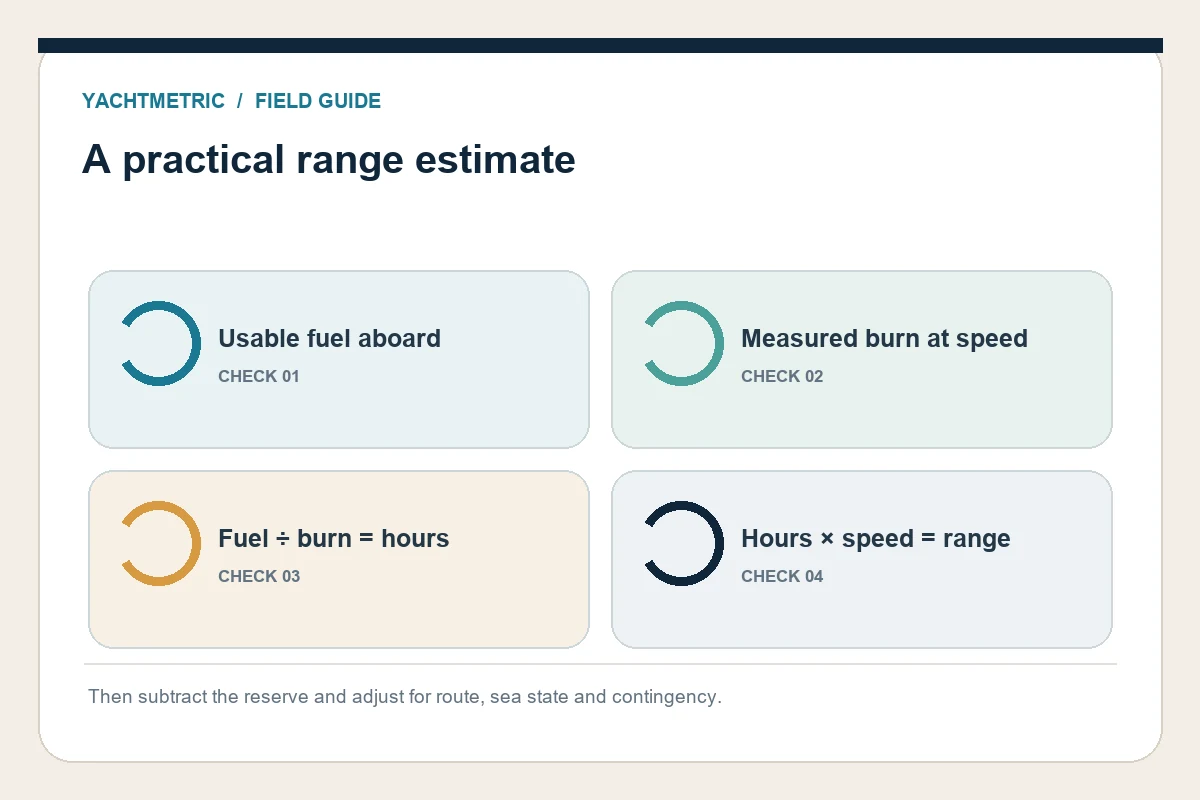
Estimate from fuel burn at a chosen speed
For a steady speed and operating condition, calculate estimated engine hours as usable fuel allocated to propulsion divided by observed fuel burn per hour. Estimated distance is those hours multiplied by speed through the water or speed over ground as appropriate to the route. The formula is simple; reliable inputs are the hard part.
Build a table from the yacht’s own records at several practical speeds, including the generator and other fuel-consuming equipment where relevant. If a consumption curve is available for the exact engine and vessel configuration, use it as a starting point and validate it onboard. Do not transfer a different yacht’s gallons-per-hour figure just because the engine model is similar.
Use a reserve and a decision point
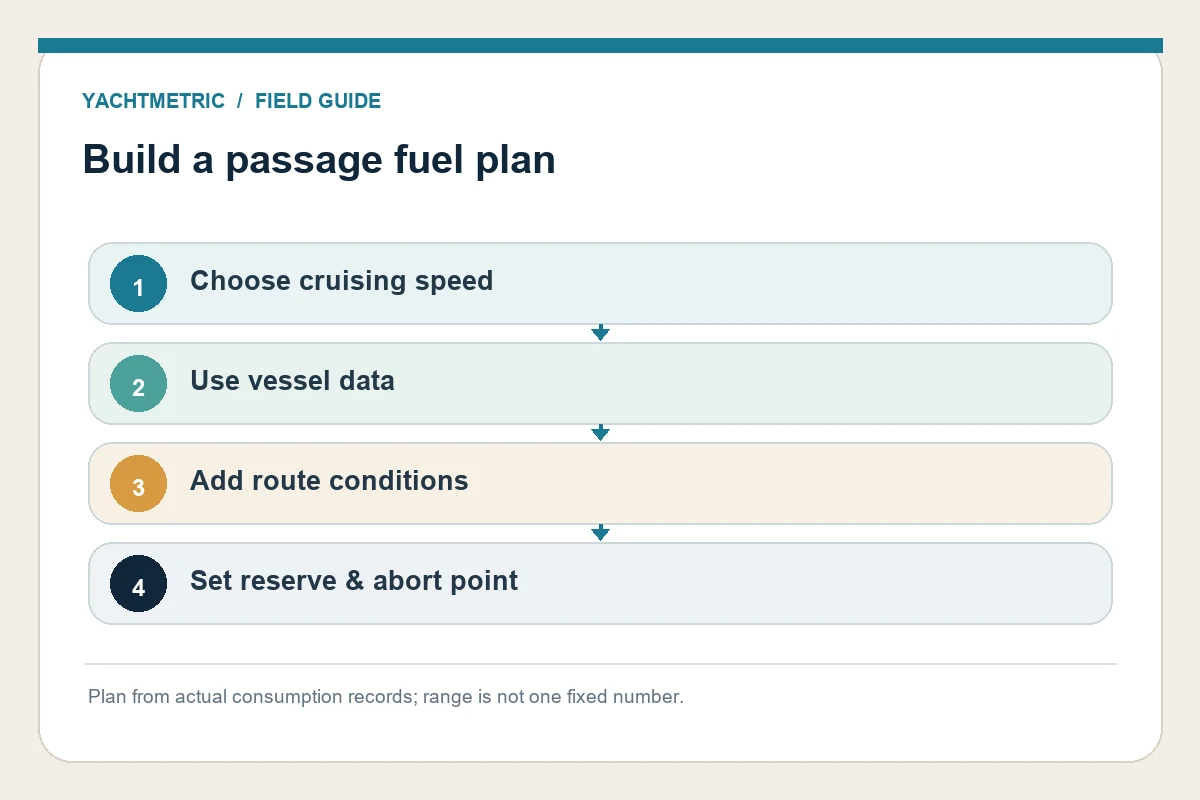
A passage plan should preserve a reserve for changing weather, detours, traffic, waiting, slow-speed maneuvering and an unexpected return to port. There is no universal reserve percentage that suits every yacht, tank arrangement, route or authority. Follow company policy, the vessel’s operating manual, applicable requirements and the captain’s risk assessment.
Define an abort or refuel point before departure. Record the planned arrival quantity and the threshold at which the route, speed or destination changes. Share the plan with the crew and monitor actual consumption at sensible intervals. If measured burn departs from expectation, investigate the cause and revise the plan early rather than relying on the last portion of tank capacity.
Account for route and conditions
Current affects speed over ground even when engine load and fuel burn remain similar. Head seas, wind, fouling and extra displacement can raise the power needed to maintain speed. A slower setting may improve range, but the relationship between speed and consumption is vessel-specific, especially near planing transition or at high load. Use trial data rather than a generic rule about hull type.
Break a long route into legs with different conditions, safe refueling options and weather windows. Include idling, harbor approaches, generator hours and expected waiting. Check fuel quality and tank filters before a long voyage, and make sure transfer pumps, gauges and alarms are understood by the crew. Carry a written backup plan if a planned fuel stop is unavailable.
Keep records that make the next estimate better
After each trip, compare planned and actual fuel use, distance, speed and conditions. Note load, generator hours and any unusual headwind or sea state. A few consistent data points can reveal whether the yacht’s planning curve is realistic and whether a particular operating speed provides a useful balance between time and fuel.
Do not treat an electronic gauge as a precise measurement unless it has been verified against known fills and the vessel’s tank geometry. Have unexpected changes in consumption checked for fouling, engine performance, propeller condition or fuel leakage. Range planning is a safety task; if the vessel lacks trustworthy data, arrange a controlled fuel-burn assessment with a competent marine engineer.
Practical next step
Before acting, identify the exact yacht, installed equipment and operating area. Gather its manuals, service records and a few clear installation photos, then ask a qualified supplier or technician to confirm the details that apply to that vessel. Keep the answer and any test results with the yacht’s maintenance records.