Yacht Refit Planning Checklist: Scope, Sequence and Sea Trials
Plan a yacht refit with a clear scope, dependencies, decision gates, commissioning plan and records that make the next maintenance cycle easier.

Research checked: October 15, 2026
Plan a yacht refit with a clear scope, dependencies, decision gates, commissioning plan and records that make the next maintenance cycle easier. This guide focuses on practical decisions, vessel-specific checks and the questions to resolve before spending money or changing an onboard system. Use the manufacturer’s current manual and a qualified marine professional for installation and safety-critical work.
Write the outcome before the work list
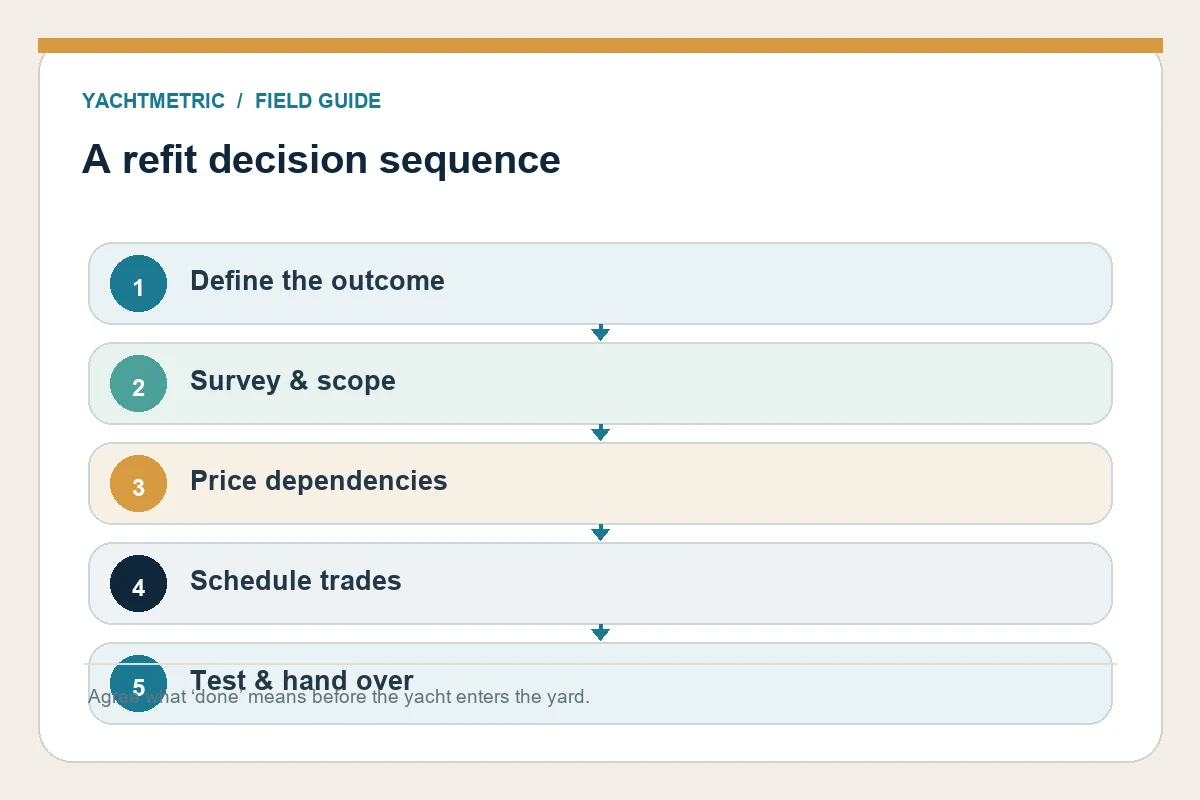
A successful refit begins with the result the owner needs: improved reliability, a new operating capability, survey findings addressed or a defined cosmetic update. Convert that goal into a written scope with acceptance criteria. ‘Upgrade navigation’ is too broad; a useful scope names the equipment, interfaces, installation work, tests and records expected at handover.
Separate essential work from optional improvements. Record why each item is included, the consequence of deferring it and who can approve a change. This avoids expanding the project every time a panel is opened. For safety-critical systems, obtain a competent survey or technical assessment before setting the final budget and schedule.
Survey the dependencies and sequence the trades
Refit tasks depend on one another. Structural work may need to precede cabling; wiring may need to finish before joinery closes; painting may follow grinding and fairing; equipment commissioning comes after power, network and software are ready. Ask the yard to identify dependencies, long-lead parts, access needs, owner-supplied items and decision deadlines.
Build a schedule with milestones for haul-out or berth access, dismantling, inspection, approvals, installation, finishing, dockside tests and sea trials. Include realistic time for parts delays and hidden defects. A 2026 Raymarine refit guide notes that compatibility, structural modification, budget and time management are common upgrade challenges; planning those interfaces early can keep a modest project from slipping.
Compare estimates by scope and risk
Ask bidders to itemize labor, equipment, subcontractors, yard fees, freight, commissioning and exclusions. Clarify whether the quote is fixed, estimated or time-and-materials, how change orders are authorized, and whether tax or disposal is included. Compare the same scope across proposals. An inexpensive number can reflect missing work rather than better efficiency.
Set a contingency based on the vessel’s age, documentation quality and the uncertainty of opening concealed spaces. Keep it separate from optional upgrades so the owner can see what is reserved for unforeseen work. Agree on a written approval threshold and a quick method for the yard to document a finding with photos, price and schedule effect.
Treat commissioning as part of the scope
Equipment installation is not complete until it has been configured and tested in the conditions for which it will be used. List dockside tests, load tests, leak checks, alarms, network data, steering or control checks, software versions and a sea trial where appropriate. Identify who signs each result and what evidence will be handed over.
For a navigation refit, for example, test the data sources and integrated functions rather than only confirming that the new display powers on. For propulsion, electrical or plumbing work, use the applicable manufacturer commissioning checklist and qualified personnel. Make the test plan part of the contract so trials, corrections and retesting are visible in the schedule.
Capture records for the next crew
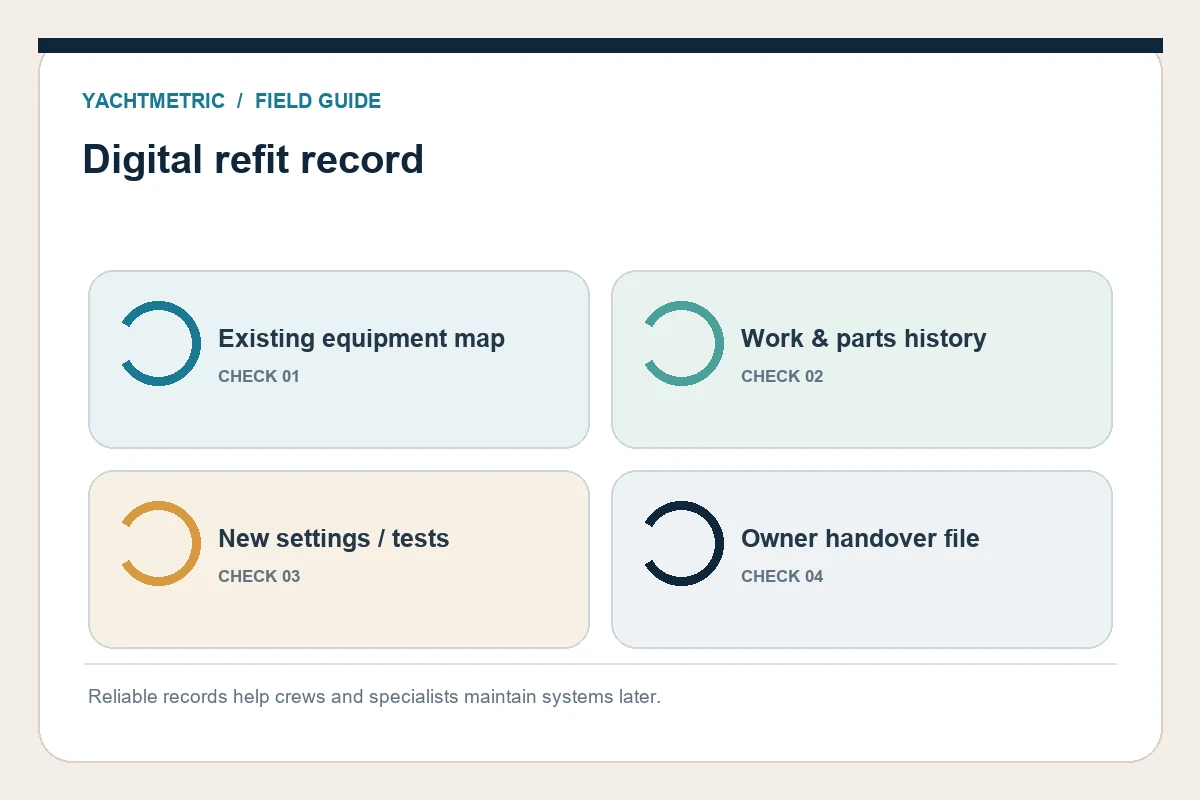
Ask for updated wiring and plumbing diagrams, equipment model and serial numbers, manuals, warranty documents, invoices, software versions, configuration backups and test results. Photograph hidden installations before panels close. Record which old parts remain in service and any compatibility caveat that the next technician should know.
The 2026 MB92 report on the intelligent refit era highlights reliable data, interoperability, skills and cybersecurity as important to digital transformation in yacht operations. A practical refit response is straightforward: keep accurate records, control remote access to connected equipment and make sure crew members understand the systems. A tidy handover is a lasting part of the refit’s value.
Practical next step
Before acting, identify the exact yacht, installed equipment and operating area. Gather its manuals, service records and a few clear installation photos, then ask a qualified supplier or technician to confirm the details that apply to that vessel. Keep the answer and any test results with the yacht’s maintenance records.