Yacht Refrigerator Guide: Ventilation, Power Use and Battery Planning
Improve marine refrigerator performance by checking airflow, supply voltage, insulation, ambient heat and measured daily energy use.

Research checked: October 15, 2026
Improve marine refrigerator performance by checking airflow, supply voltage, insulation, ambient heat and measured daily energy use. This guide focuses on practical decisions, vessel-specific checks and the questions to resolve before spending money or changing an onboard system. Use the manufacturer’s current manual and a qualified marine professional for installation and safety-critical work.
Begin with symptoms and operating conditions
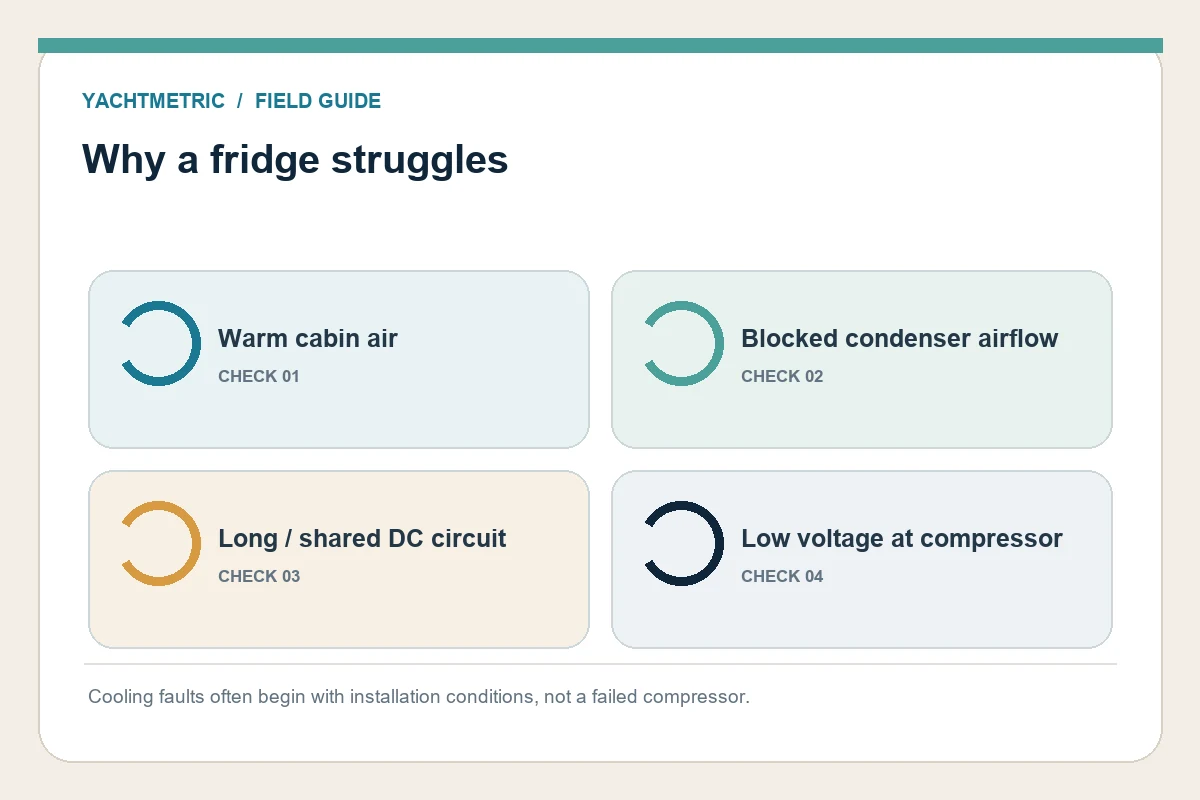
A marine refrigerator that runs for long periods, cools unevenly or shuts down at anchor may have an airflow, power, seal or temperature problem. Before replacing the compressor, record the cabin temperature, thermostat setting, food load, door openings and time spent on shore power versus batteries. Compare the same readings on a cool day and in warm weather.
Check the door gasket, latch and cabinet insulation. Look for warm air trapped behind the condenser or a blocked intake grille. A refrigerator installed in a tight cabinet can reject heat poorly, run longer and use more energy. Dometic’s marine guidance published in 2026 points to ventilation and voltage drop among common reasons a boat refrigerator underperforms.
Give the condenser a path for heat to leave
Follow the appliance manual for clearances and ventilation openings. The fridge removes heat from its interior and releases it at the condenser; enclosing that hot side without an airflow path makes the refrigeration cycle work harder. Do not add a fan or cut new vents without considering noise, salt exposure, water ingress and the cabinet’s structure.
Inspect the condenser and fan for dust, lint or salt buildup using the maker’s cleaning method. Make sure stored bags or provisions have not covered a vent. If ventilation is restricted by the original cabinetry, ask a marine refrigeration technician to propose a safe airflow change and confirm it will not draw damp air into vulnerable spaces.
Check voltage where the refrigerator is connected
A battery bank can show a reasonable voltage while the appliance receives less because of cable length, undersized conductors, shared loads, poor connections or corrosion. Measure supply voltage at the refrigerator terminals while the compressor starts and runs, using a competent person and the manufacturer’s method. Compare with the model’s specified operating range; do not rely on a generic threshold.
Inspect the circuit protection, terminal condition and cable route. Do not increase a fuse to mask a trip, and do not splice in a larger conductor without checking the complete circuit and termination ratings. If low voltage is confirmed, have a marine electrician review conductor sizing and connection quality. Dometic notes that voltage drop can trigger low-voltage protection or impair performance.
Estimate energy use from measured duty cycles
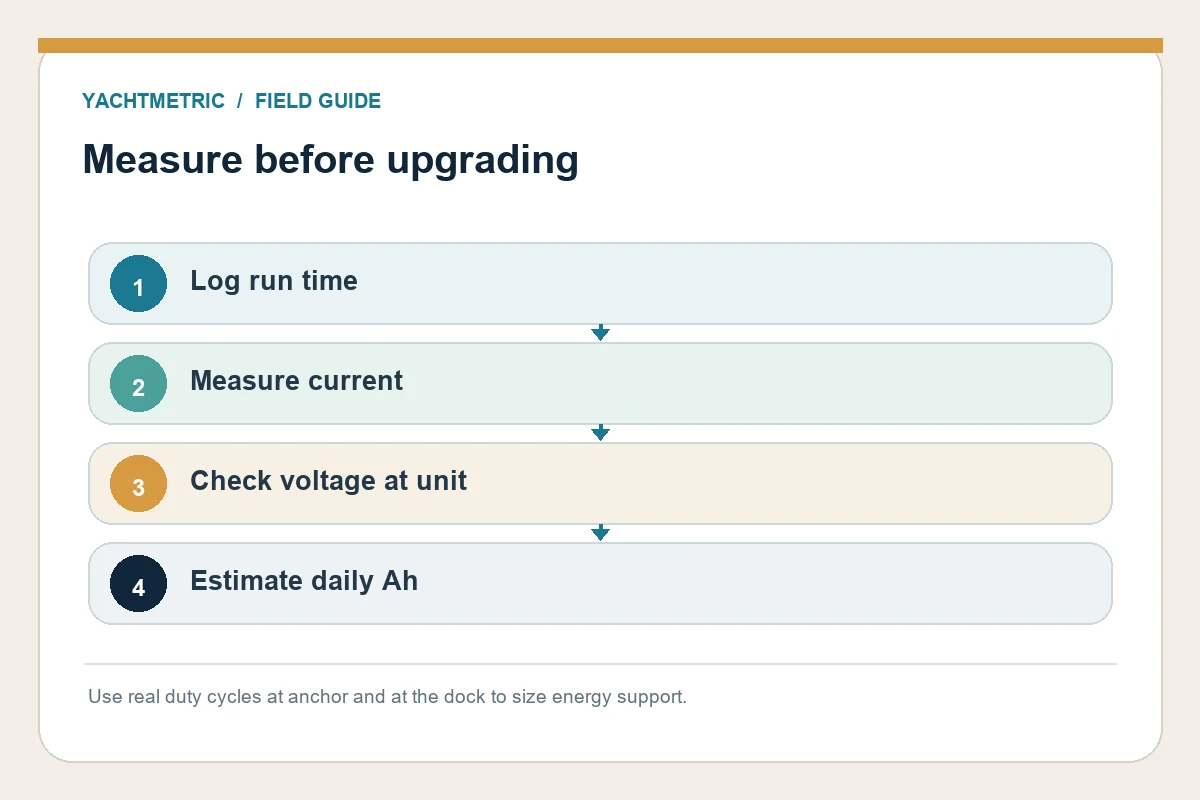
For a DC unit, measure average current over representative periods rather than multiplying the peak compressor current by every hour of the day. A clamp meter or suitable battery monitor can help, but instrument placement and settings matter. Record daily amp-hours at anchor, at the dock and while underway because ambient temperature and charging sources change the result.
A simple estimate is average current while running multiplied by the hours the compressor actually runs in a day. Then add the result to other onboard loads and consider battery usable capacity, charging availability and the owner’s reserve plan. This is a planning estimate, not a guaranteed consumption figure. A hot galley, poor ventilation or frequent door opening can change the duty cycle substantially.
Improve performance before replacing equipment
Correct airflow, clean heat-exchange surfaces, restore a sound door seal, set a sensible thermostat and avoid loading the refrigerator with warm provisions all at once. Keep ventilation openings clear and let cold air circulate without overpacking shelves. When leaving the yacht, follow the manufacturer’s instructions for cleaning, defrosting and securing the door.
If the unit still performs poorly, provide the technician with the model, installation photos, supply voltage under load and a run-time log. That evidence can separate a refrigeration fault from an electrical or installation issue. Compare replacement options on cabinet dimensions, service access, ventilation needs, starting current, measured energy use and local parts support—not capacity alone.
Practical next step
Before acting, identify the exact yacht, installed equipment and operating area. Gather its manuals, service records and a few clear installation photos, then ask a qualified supplier or technician to confirm the details that apply to that vessel. Keep the answer and any test results with the yacht’s maintenance records.