Yacht Remote Monitoring: Sensors, Connectivity and Useful Alerts
Build a useful remote yacht monitoring setup by choosing what to measure, checking connectivity, setting meaningful alerts and defining who responds.

Research checked: October 15, 2026
Build a useful remote yacht monitoring setup by choosing what to measure, checking connectivity, setting meaningful alerts and defining who responds. This guide focuses on practical decisions, vessel-specific checks and the questions to resolve before spending money or changing an onboard system. Use the manufacturer’s current manual and a qualified marine professional for installation and safety-critical work.
Decide what problem remote monitoring should solve
Remote monitoring is useful when an owner or captain needs to know whether a yacht is ready, whether shore power is present, or whether a system has changed while the boat is unattended. It can also make troubleshooting more informed by preserving a history of voltage, tank levels or equipment status. The aim is earlier awareness and better handoff, not a promise that an app will prevent every failure.
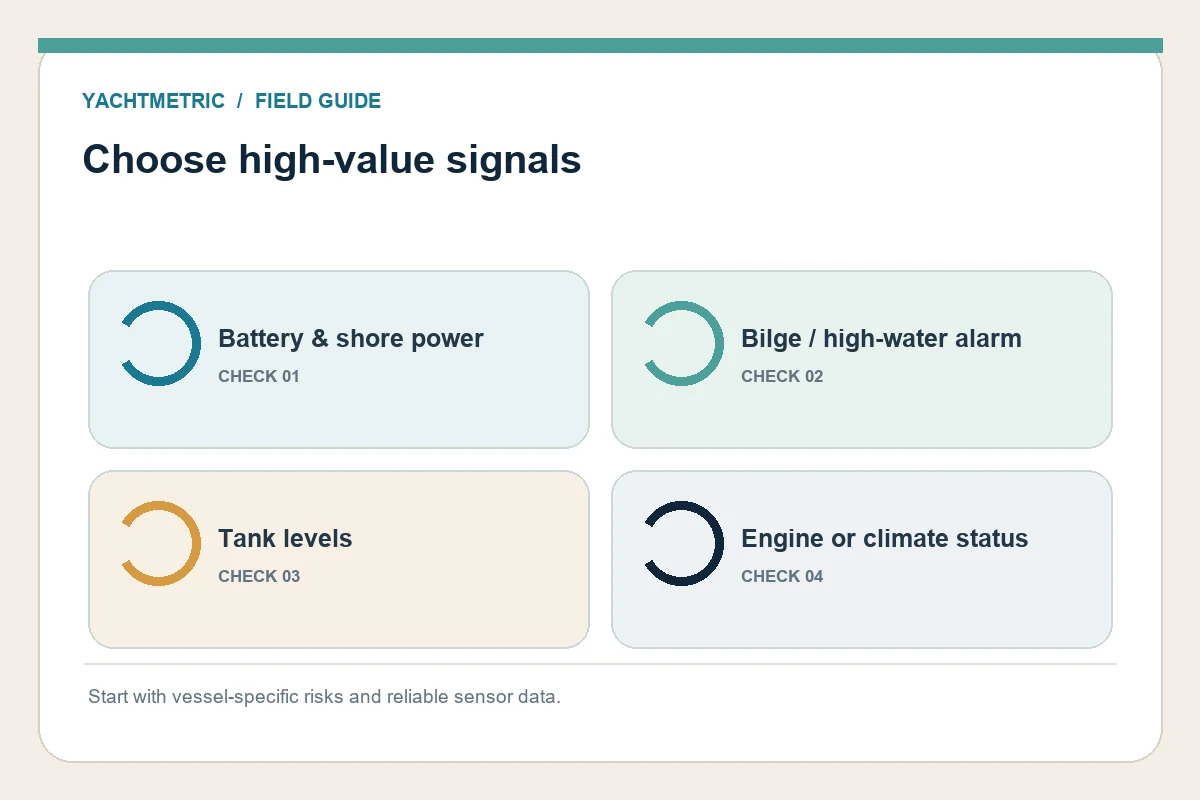
Start with a risk-and-response list. For each system, write down what can fail, what signal would reveal it, how quickly it matters and who can respond. Battery state and shore power, bilge alarms, refrigerator or HVAC status, tank levels and equipment room temperature may be useful depending on the vessel. Avoid adding sensors that nobody will check or maintain.
Map the data path
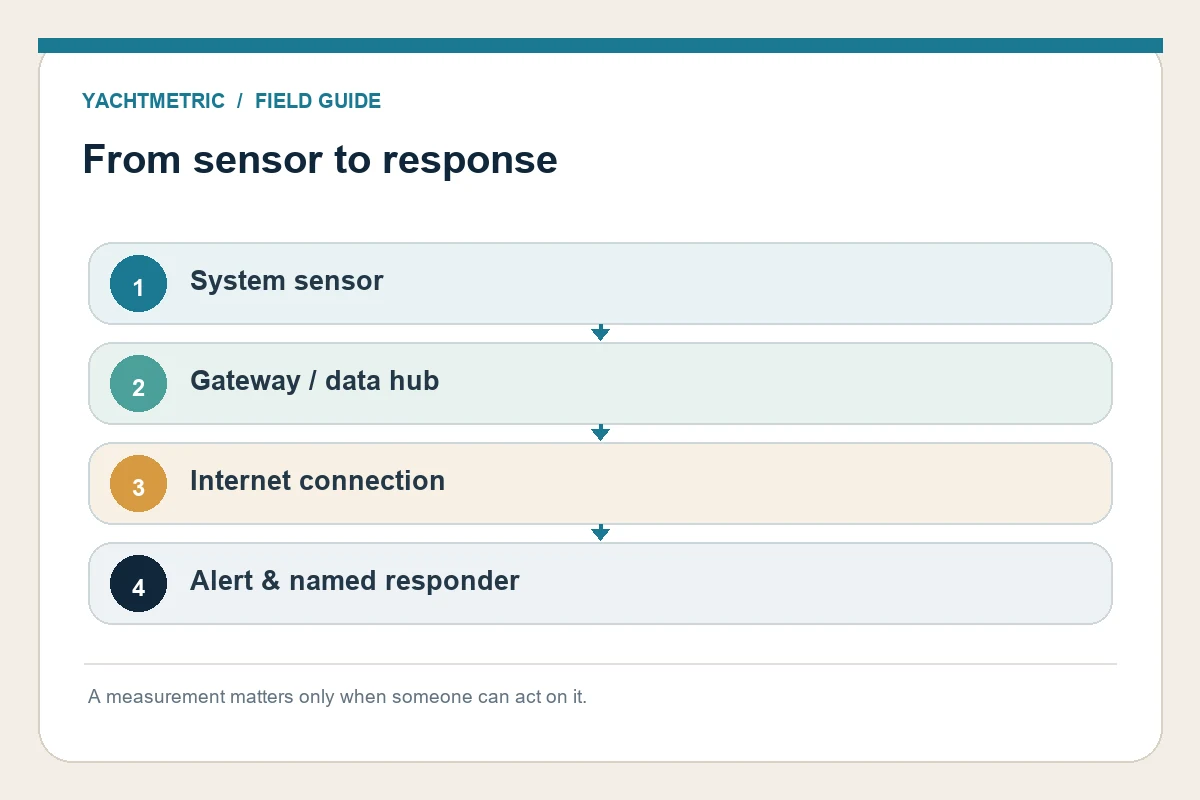
A typical setup includes a sensor or connected device, a gateway or monitoring hub, a local network and an internet path such as marina Wi-Fi or cellular/satellite connectivity. The sensor must report a usable value, the gateway must support its interface, and the connection must remain available at the berth or anchorage. Confirm which features work locally if internet access drops.
Victron’s GX and VRM documentation describes remote access to connected system data, alarms and settings, with supported marine MFD integrations for selected information. That illustrates what one ecosystem can do; it does not mean all brands or sensors interoperate. Verify the exact gateway, firmware, tank sender, network interface and screen combination before purchase.
Make alerts specific and actionable
Set a small number of alerts with a clear reason and a defined response. A low-battery warning should name the battery bank and the threshold basis. A shore-power loss alert should account for planned disconnection and brief marina interruptions. A bilge high-water alarm should distinguish an urgent water-level event from a sensor fault where the system allows it.
Write a short response card for each critical alert: who receives it, what first checks are safe remotely, when to contact the marina or captain, and what must never be controlled without someone onboard. Alerts that fire repeatedly without action become background noise. Review thresholds after observing normal operation through a full season and test delivery to each intended recipient.
Protect access and privacy
A connected monitoring system creates accounts, remote access and potentially location or usage records. Use unique passwords and multifactor authentication where available. Limit administrator access to people who need it, remove former crew promptly and document who can control equipment remotely. Keep the monitoring network and general guest Wi-Fi separated according to the installer’s design.
Decide how long data is retained, which cloud service stores it and how access is recovered if the owner or captain changes. Update supported equipment and gateways through documented procedures. Keep a local operating method for essential systems; remote tools should supplement the yacht’s normal alarms, inspections and onboard controls.
Commission and maintain the setup
Test each sensor against a known condition during commissioning. Compare battery readings with a suitable instrument, verify tank indications at more than one level, simulate safe alarms as allowed by the manual and confirm data reaches the correct phone or dashboard. Check that alerts arrive over the actual connection used at the yacht’s berth, then repeat the test after major network changes.
Maintain a simple system register with device model, firmware, sensor location, network path, account owner and service contact. Review it before leaving the vessel unattended for an extended period. The 2026 MB92 industry report on the ‘intelligent refit’ highlights reliable data, interoperability, skills and cybersecurity as conditions for digital tools to support human expertise. That is a useful test for any monitoring purchase: can the crew trust the reading and act on it?
Practical next step
Before acting, identify the exact yacht, installed equipment and operating area. Gather its manuals, service records and a few clear installation photos, then ask a qualified supplier or technician to confirm the details that apply to that vessel. Keep the answer and any test results with the yacht’s maintenance records.