Yacht Stabilizer Cost: Gyro vs Fin Systems
Compare gyro and fin stabilizer equipment prices, installation work, operating power and maintenance for yacht refits.
Research checked: October 15, 2026
A yacht stabilizer can make a rolling anchorage or passage more comfortable, but a product price is only the starting point for a refit budget. Gyroscopic units and active fins differ in where they fit, how they work at anchor and underway, the power they use and the hull work required.
This guide compares yacht stabilizer cost using published manufacturer prices where available, then shows what to request in a complete installation proposal.
Yacht Stabilizer Cost: Quick Answer
Seakeeper's published U.S. product prices, checked October 15, 2026, start at $17,400 for its smallest gyro. The listed Seakeeper 4 starts at $47,400 for approximately 38–44 ft boats up to about 15 tons; the Seakeeper 6 starts at $69,600 for approximately 44–52 ft boats up to about 24 tons. These prices exclude installation and may change. Model selection requires displacement and other boat data, not length alone.
Seakeeper states that gyro installation commonly runs about $10,000–$30,000 and up. That is a broad maker-published estimate, not a quote for your hull. Adding it arithmetically to the listed Seakeeper 6 price suggests $79,600–$99,600 and up before taxes, transport or unusual structural work. A survey and dealer proposal determine the real total.
For fins, Sleipner's published guidance gives an approximate equipment-cost example of $65,000 for a 55-foot vessel. It says a detailed proposal is needed. This is a different vessel and product scope from the Seakeeper example, so the two figures are not a direct head-to-head quote.
Gyro vs Fin Systems: What Changes the Choice?
| Question | Gyroscopic stabilizer | Active fin stabilizer |
|---|---|---|
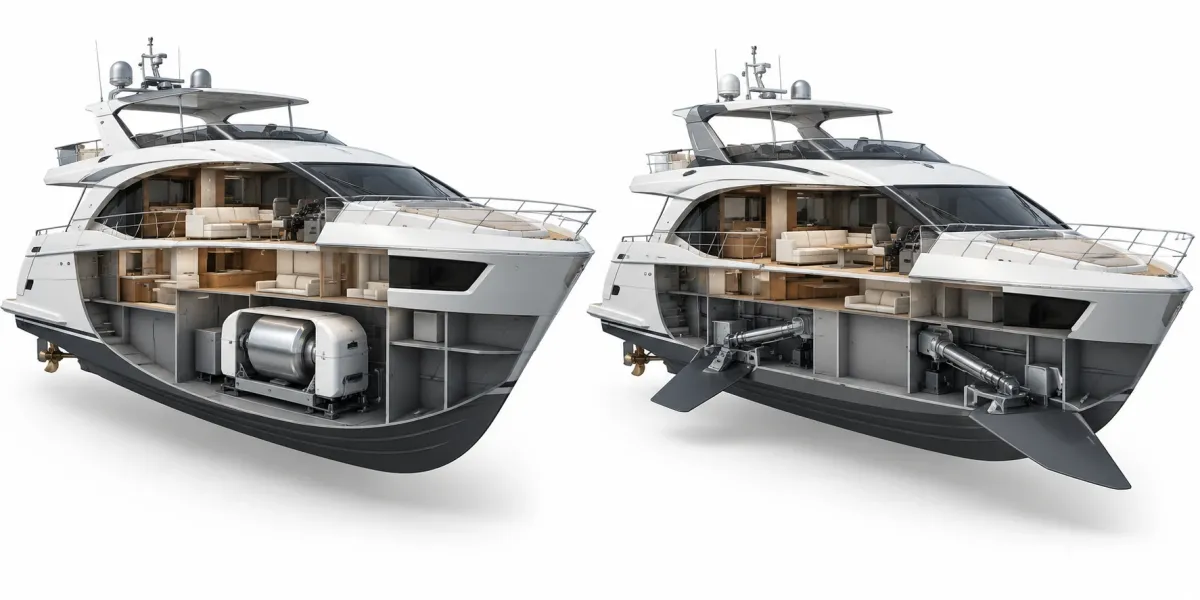
| Where does it act? | Inside the hull through a controlled spinning flywheel. | External fins apply forces through the water via hull-mounted actuators. |
| At anchor? | Gyro products are designed to reduce roll without forward motion. | Requires a zero-speed-capable fin design and suitable sizing; older underway-only fins differ. |
| Underway? | Performance depends on gyro sizing and roll conditions. | Fin effectiveness can increase with speed, depending on system and vessel. |
| Refit work? | Space, structure, cooling, electrical supply and service access. | Haul-out, hull penetrations, reinforcement, actuators and watertight installation. |
| Potential trade-off? | Internal volume, mass, power draw and spin-up time. | External appendages, drag, underwater inspection and grounding exposure. |
These are system characteristics, not a promise of performance for a particular yacht. Compare proposals sized to the same vessel, speed profile and sea conditions. Sleipner explains how its Vector Fins work both underway and at anchor; its published roll-reduction claims apply to its own products and stated conditions.
What Must an Installed Quote Include?
First, ask both suppliers to specify the yacht's loaded displacement, length, beam, roll behavior and intended use. A unit that technically fits by length may be undersized for the vessel's mass or expected conditions.
For a gyro, request the unit, foundation design, required structural reinforcement, lifting route, cooling circuit, electrical capacity, batteries or generator changes, controls, commissioning and access for future service. Confirm how long the unit takes to reach useful operating speed and what it draws at startup and in continuous use.
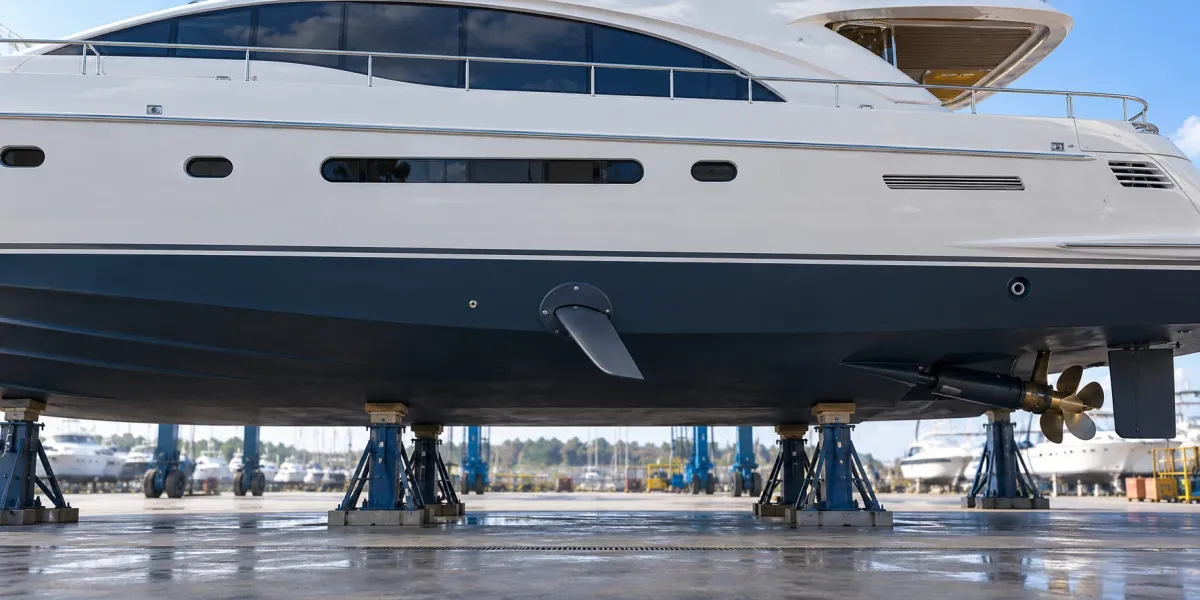
For fins, include haul-out and launch, hull design review, penetrations, reinforcement, actuators, hydraulic or electric power system, controls, anodes, fairing, antifouling, watertight checks and sea trial. Sleipner's installation guidance assigns hull-strength and watertight-integrity assessment to the installer or builder. Do not treat a generic equipment price as approval for a specific hull modification.
Operating Power and Ongoing Costs
Neither system operates without an energy budget. Gyros draw power to spin and run controls and cooling. Active fins draw power as actuators move; external fins may affect drag, depending on shape, speed and installation. Ask for the exact model's measured power use and any added generator hours or fuel impact at your normal speed.
As one product-family example, Quick lists operating power from 320–700 W for its X2 DC gyro. Larger models differ, and this figure cannot be used as a generic gyro average. Convert model-specific draw into an annual energy budget: an illustrative 0.7 kW sustained for 100 hours uses 70 kWh. Then add startup draw, cooling and the price of supplying that energy.
Seakeeper's maintenance schedule calls for recommended service by running hours or years, whichever occurs first, including an annual or 1,000-hour interval for relevant work. Fin systems also need inspection; Sleipner's maintenance material calls for fin inspection during haul-out. Request model-specific annual service estimates for each proposal.
Show stabilizer service and any extra haul-out work alongside the wider yacht maintenance budget. Do not assume an advertised percentage of roll reduction can be translated into financial return.
Which System Fits Your Cruising Pattern?
If comfort at anchor is the priority, compare a suitable gyro with a zero-speed-capable fin system. If most uncomfortable time occurs underway, pay close attention to fin performance at your actual cruising speeds and to the gyro's sizing for the vessel. New builds may integrate either system more readily than a finished boat; refit access and hull construction can dominate cost.
Before purchase, ask for a demonstration on a comparable vessel in comparable sea conditions. Request written predictions for roll reduction at anchor and underway, system noise, spin-up time, power draw and service access. These are more useful than choosing from a price list alone.
If you are buying a used yacht with stabilizers fitted, ask the surveyor to inspect installation records, service history, controls, structural supports and underwater components. Add these checks to a used-yacht survey.
Frequently Asked Questions
How much does a yacht gyro stabilizer cost?
Published Seakeeper product prices span $17,400 to more than $300,000 across models as of October 15, 2026, before installation. The model and installed price depend on the boat's displacement and construction.
Are fin stabilizers better at anchor?
It depends on the fin model and system design. Some modern fins stabilize at zero speed; older fins may be intended primarily for underway use. Compare a specified fin system and gyro on the same yacht.
Do stabilizers increase fuel use?
They require power, and fins may add drag. The net fuel effect varies with system, hull, speed and sea conditions. Request model-specific power and sea-trial data.
Can stabilizers be retrofitted?
Many can, subject to structural, space, electrical and hull requirements. Get a qualified installer and naval architect to assess the specific vessel before budgeting or approving hull work.